
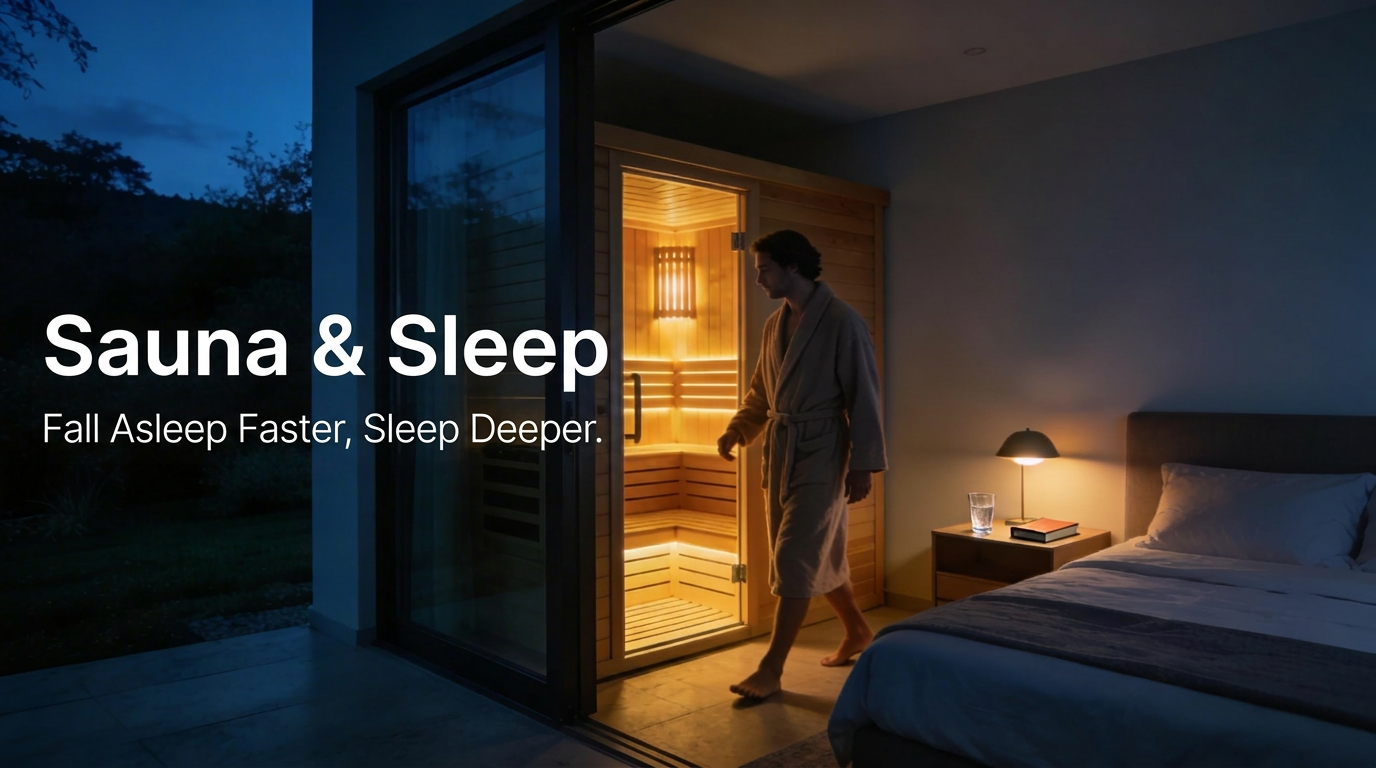
Sauna & Sleep: The Science-Backed Way to Fall Asleep Faster and Sleep Deeper
Most people searching for better sleep are looking in the wrong places. The answer might be as simple as sitting in a hot room for 20 minutes before bed. A growing body of scientific research links regular sauna use with faster sleep onset, more time in deep sleep stages, and significantly improved overall sleep quality — through a mechanism that works with your body's natural biology rather than overriding it.
The Core Mechanism
A sauna session raises your core body temperature. When you step out, your body begins rapid active cooling — a faster and more dramatic temperature drop than your body produces on its own. It is this post-sauna temperature drop, not the heat itself, that triggers melatonin release and accelerates sleep onset. Timing is everything: finish your sauna session 60–90 minutes before bed for maximum effect.
The Science: Why Body Temperature Controls Sleep
Sleep is not simply a response to fatigue. One of the primary signals your brain uses to initiate sleep is your internal body temperature — specifically, a drop in core temperature that signals to the brain that it is time to shift into sleep mode. This is a fundamental component of your circadian rhythm, the approximately 24-hour internal clock that regulates hormone secretion, alertness, and every physiological process throughout the day.
As evening approaches, your body's core temperature naturally decreases by roughly 1–2°F. This minor shift is one of the primary cues your brain uses to begin melatonin production — the hormone responsible for sleep onset and sleep quality. When this temperature drop is blunted by stress, poor sleep hygiene, or thermoregulatory dysfunction, sleep becomes harder to initiate and maintain.
What Happens in Your Body During and After a Sauna Session
During the Session
When you enter a sauna, your core body temperature begins rising within the first few minutes. Your cardiovascular system responds by increasing heart rate and cardiac output. Blood vessels dilate, pushing blood toward the skin surface to dissipate heat. Cortisol levels begin to decrease. The nervous system starts transitioning from sympathetic dominance (fight-or-flight) toward parasympathetic dominance (rest-and-digest).
Heat Shock Proteins (HSPs) are triggered during this phase — powerful cellular repair proteins that have been linked to improved cellular resilience and reduced neuroinflammation. The same HSP production that supports physical recovery also appears to support the quality of slow-wave deep sleep, where the most significant cellular repair occurs overnight.
After the Session: The Sleep Trigger
When you step out of the sauna, your body initiates rapid active cooling — accelerating the same temperature drop that your circadian rhythm produces naturally each evening, but more dramatically and more quickly. This amplified cooling signal reaches the hypothalamus — the brain region that regulates both body temperature and sleep — and triggers a strong melatonin release.
The Research: Studies in Sleep Medicine Reviews identified core body temperature drop as one of the most reliable physiological predictors of sleep onset timing. Artificially warming the body through sauna and then allowing it to cool produces a measurable reduction in sleep onset latency averaging 10–15 minutes faster than baseline. The deeper and faster the post-warming temperature drop, the stronger the sleep-initiation signal.
Infrared vs Traditional Sauna for Sleep
Both types produce the temperature elevation and subsequent cooling that drives sleep benefits. The differences are in how they achieve it and which is more practical for an evening routine.
| Factor | Infrared Sauna | Traditional Sauna |
|---|---|---|
| Temperature | 110–150°F | 150–195°F |
| Heat-up time | 10–15 minutes | 30–40 minutes |
| Session duration for sleep | 20–30 minutes comfortable | 15–20 minutes recommended |
| Post-session cooling | Gradual — gentler trigger | Faster — stronger sleep trigger |
| Stimulation level | Lower — easier to wind down | Higher — needs more cooldown time |
| Best for sleep if... | You want easy daily evening routine | You want maximum sleep-onset effect |
The Exact Sleep Protocol: Step by Step
The Sauna Sleep Protocol
- Hydrate (30–60 minutes before): Drink 16 oz of water. Dehydration blunts the thermoregulatory response and reduces melatonin production.
- Session (15–25 minutes): Infrared at 120–140°F or traditional at 150–170°F. Lower temperatures than performance sessions — the goal is relaxation, not intensity. Focus on slow diaphragmatic breathing.
- End 60–90 minutes before bed: The most critical variable. This gives the cooling process time to reach its trough precisely at sleep onset.
- Cool down naturally: Move to a cool room (60–67°F). Air dry rather than toweling off — this allows your skin to continue radiating heat. A lukewarm shower is fine.
- Dark environment immediately after: Light exposure after your session suppresses the melatonin your sauna just triggered. Dim lights immediately.
- No screens for 30+ minutes: Blue light further suppresses the melatonin response.
Should You Cold Plunge After a Sleep Sauna Session?
For sleep-focused sessions, skip the full cold plunge. The norepinephrine and dopamine surge from cold immersion can increase alertness for 2–3 hours — delaying sleep onset rather than accelerating it. A brief lukewarm shower (30–60 seconds) is fine. Save the cold plunge for morning contrast therapy sessions where the alertness effect is a benefit.
Who Benefits Most
People With Persistent Stress and High Cortisol
Elevated cortisol suppresses melatonin production — when cortisol is high, sleep is difficult. Evening sauna sessions physically force the nervous system from sympathetic (stress) dominance to parasympathetic (recovery) dominance, actively lowering cortisol. For chronically stressed individuals, this enforced physiological reset is often more effective than behavioral sleep hygiene interventions alone.
People Whose Sleep Is Light or Frequently Disrupted
The Heat Shock Protein production triggered by sauna, combined with the amplified temperature drop that promotes sleep onset, appears to increase slow-wave sleep duration. Users report not just falling asleep faster but waking genuinely more rested — a reliable indicator of improved deep sleep architecture.
Perimenopausal and Menopausal Women
Night sweats and hot flashes driven by declining estrogen are among the most common causes of menopausal sleep disruption. Regular sauna use supports hypothalamic thermoregulatory recalibration which may reduce night sweat frequency over 4–6 weeks. For more on cold and heat therapy specifically for women's hormonal health, see our Cold Plunge Benefits for Women guide.
Athletes Needing Recovery Sleep
Heavy training elevates cortisol and systemic inflammation — both of which interfere with the deep sleep that recovery requires. Post-training sauna use addresses both simultaneously: lowering cortisol through parasympathetic activation and reducing inflammation through HSP production.
Building a Consistent Sauna Sleep Routine
The sleep benefits of sauna use are cumulative. Research shows the most significant improvements in sleep quality occur after 3–4 weeks of regular use at 3–4 times per week. Your nervous system adapts, the circadian temperature rhythm becomes more pronounced, and melatonin release becomes more reliable.
The most important variable is consistency of timing. Using your sauna at approximately the same time each evening reinforces the circadian signal. Your brain begins associating the post-sauna cooling with sleep onset — a conditioned response that strengthens over time. This is why a home sauna is significantly more effective for sleep therapy than occasional spa visits.
Frequently Asked Questions
How does using a sauna before bed improve sleep quality?
A sauna session raises core body temperature above its natural evening baseline. When you step out, your body initiates rapid active cooling — producing a faster temperature drop than your circadian rhythm generates on its own. This amplified cooling signal triggers a strong melatonin release, reducing sleep onset latency and increasing slow-wave deep sleep. Research shows 83.5% of regular sauna users report improved sleep quality.
What is the ideal timing for a sauna session before sleep?
Finish your sauna session 60–90 minutes before your target bedtime. This allows the post-sauna cooling to reach its trough — the point of maximum temperature drop — precisely at sleep onset. Sessions ending less than 45 minutes before bed leave core temperature too elevated. Sessions ending more than 2 hours before bed allow the effect to dissipate.
What is the ideal duration for a sleep-focused sauna session?
15–25 minutes at moderate temperature is optimal. For infrared saunas: 120–140°F for 20–25 minutes. For traditional saunas: 150–170°F for 15–20 minutes. This is shorter and cooler than performance sessions — the goal is parasympathetic relaxation and thermal priming, not maximum cardiovascular stimulus.
Can I use a sauna every night before bed?
Yes — for most healthy adults, nightly sauna use for sleep is safe and beneficial. Using your sauna at the same time each evening reinforces the circadian temperature signal, creating a conditioned melatonin response that strengthens over weeks. Drink 16 oz of water before each session and replenish after.
Should I cold plunge after a sleep sauna session?
Generally no. Cold immersion triggers a norepinephrine and dopamine surge that increases alertness for 2–3 hours, delaying rather than accelerating sleep onset. A brief lukewarm shower is fine. Save full cold plunges for morning contrast therapy sessions where the alertness effect is beneficial.
Is infrared or traditional sauna better for sleep?
Both work through the same mechanism. Infrared is more practical for nightly routines: 10-minute heat-up, comfortable lower temperatures, less stimulation. Traditional saunas produce a more dramatic temperature elevation and stronger cooling effect. For daily consistency, infrared wins. For maximum melatonin trigger on dedicated evenings, traditional sauna's intensity is an advantage.
How long before I notice sleep improvements from sauna use?
Many people notice faster sleep onset after their first or second session. The most significant improvements — more deep sleep, waking more refreshed, reduced nighttime waking — develop over 3–4 weeks of consistent use at 3–4 times per week. The nervous system adaptation and circadian reinforcement compound over time, similar to how exercise benefits accumulate.
Build Your Sleep Sauna Practice at Home
The consistent nightly ritual that produces compounding sleep improvements is only possible with a home sauna. Contact us to find the right model for your space and sleep routine.
📞 929-493-4366 | 📧 Jerry@CollectiveRelaxation.com | Mon–Fri 9am–5pm EST
Written by Jerry Vaiana

Leave a comment
This site is protected by hCaptcha and the hCaptcha Privacy Policy and Terms of Service apply.