

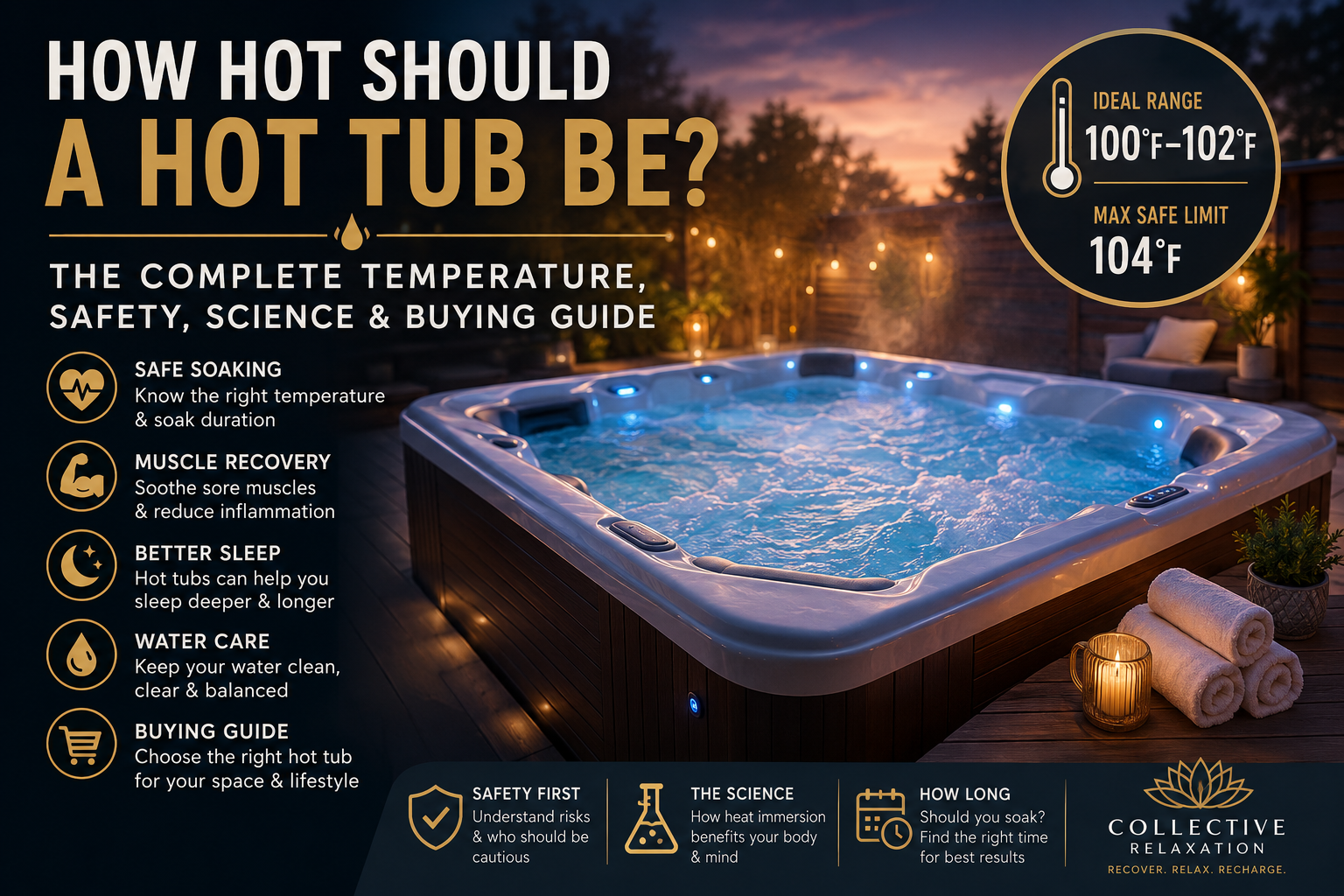
How Hot Should A Hot Tub Be?

A quick visual guide to hot tub temperature, safety, and buying essentials.
Hot tubs are one of the most popular home wellness investments in the country — but "how hot should it actually be" is a question most owners never get a straight answer to until something goes wrong: an overheated, lightheaded moment mid-soak, or water that turns cloudy far faster than expected. This guide covers the full picture: the ideal temperature, the physiology behind why heat immersion works the way it does, who should be cautious, water chemistry, running costs, seasonal considerations, and how to choose the right size hot tub for your household.
For most healthy adults, a good hot tub range is 100°F to 102°F, while 104°F is the maximum safe limit set by most manufacturers and public health guidance. Lower settings support longer, more comfortable soaks, while hotter settings shorten the safe soak time. If children, older adults, pregnancy, or medical conditions are involved, a lower temperature is the safer choice.
- Ideal Temperature by Situation
- The Physiology of Hot Water Immersion
- How Long Can You Stay In?
- Warning Signs You're Overheating
- Special Considerations by Group
- Hot Tubs for Sore Muscles and Recovery
- Hot Tub Before Bed
- Water Chemistry and Maintenance
- What It Costs to Run a Hot Tub
- Seasonal Considerations
- Choosing the Right Size Hot Tub
- Frequently Asked Questions
Ideal Hot Tub Temperature by Situation
There's no single "correct" number for every household — the right temperature depends on who's using it, how long they plan to soak, and any underlying health considerations.
| Situation | Recommended Range | Notes |
|---|---|---|
| General healthy adult use | 100°F – 102°F | Comfortable for 15–30 minute soaks |
| Maximum safe limit | 104°F | Standard manufacturer ceiling; not recommended for extended soaking |
| Pregnancy | Under 100°F, or avoid | Consult your doctor before use |
| Children | Under 95°F | Shorter sessions, closer supervision |
| Heart conditions / high blood pressure | 95°F – 100°F | Consult a physician first |
| Diabetes or neuropathy | 95°F – 100°F | Reduced sensation can mask overheating or burns |
| Before bed / relaxation soak | 100°F – 102°F | Moderate heat supports the cooldown effect that helps sleep onset |
| Post-workout recovery | 100°F – 104°F | Shorter session at the higher end is generally fine for healthy adults |

A relaxing evening soak — this display reads 102°F, right in the ideal comfort range.
The Physiology of Hot Water Immersion
Understanding why temperature matters makes the guidelines above easier to follow instead of just memorizing numbers.
When your body is immersed in hot water, blood vessels near the skin's surface dilate (vasodilation) to help release heat and cool the body. This increases blood flow to the skin and extremities, which is part of why muscles feel looser and circulation feels improved after a soak. At the same time, your heart rate increases to compensate for that expanded blood vessel volume — for a healthy adult, this is a normal, mild cardiovascular response, similar to light exercise. For someone with an existing heart condition, that same response can be more taxing, which is exactly why temperature limits get stricter for at-risk groups.
Your body also loses fluid through sweating even while submerged in water, which is easy to underestimate because you don't feel "sweaty" the way you would on land. This is the core reason hydration matters just as much in a hot tub as it does in a sauna.
How Long Can You Stay in a Hot Tub?
A reasonable hot tub session is usually 15 to 30 minutes, depending on water temperature and how you feel. The hotter the water, the shorter the soak should be — at 104°F, most guidance recommends capping sessions closer to 15 minutes. If you start feeling lightheaded, overheated, or thirsty, get out right away. Comfort and hydration matter more than trying to stay in as long as possible.
First-time users and anyone soaking for the first time in a while should start on the shorter end — 10 to 15 minutes — and build tolerance over multiple sessions rather than starting with a full 30-minute soak at maximum temperature.
Warning Signs You're Overheating
Knowing when to get out is more important than any specific timer. Exit the hot tub immediately if you notice any of the following:
- Dizziness, lightheadedness, or feeling faint
- Nausea or an upset stomach
- A racing or irregular heartbeat
- Excessive sweating or flushed, overly hot skin
- Headache that develops mid-soak
- Unusual fatigue or drowsiness
If any of these symptoms occur, exit the water, sit or lie down in a cool area, and rehydrate. If symptoms don't resolve quickly, seek medical attention.
Special Considerations by Group
Pregnancy
Elevated core body temperature during early pregnancy has been associated with increased risk in some studies, which is why most obstetric guidance recommends keeping water under 100°F and limiting session length — or avoiding hot tub use altogether during the first trimester. Always consult your doctor before using a hot tub while pregnant.
Children
Children regulate body heat less efficiently than adults and can overheat faster. Water under 95°F, shorter sessions, and direct supervision are the standard safety recommendations for children using a hot tub.
Heart Conditions and High Blood Pressure
Because hot water immersion mildly elevates heart rate and affects blood vessel dilation, anyone with a diagnosed heart condition or blood pressure issue should talk to their physician before regular hot tub use, and generally stick to the lower end of the temperature range.
Diabetes or Reduced Sensation
Conditions that reduce sensation in the skin — including diabetic neuropathy — can make it harder to notice water that's too hot before a burn occurs. A lower temperature and a thermometer check before entry are sensible precautions.
Hot Tubs for Sore Muscles and Recovery
Warm water combined with hydrotherapy jets encourages relaxation, improves circulation, and helps stiff or fatigued tissue feel looser. The jets themselves add a mechanical massage effect on top of the thermal benefit — targeted streams of water and air create pressure and movement against specific muscle groups, which is part of why a hot tub soak can feel noticeably different from a plain warm bath.
Hot tubs work especially well for general post-activity tightness, everyday stress-related tension, and as a passive recovery tool after a hard workout or a long day on your feet. One important caveat: if an area is newly injured, visibly swollen, or sharply painful, heat may not be the right first move — cold therapy is often better suited to acute injuries in the first 24-48 hours, while heat is better suited to chronic tightness and general recovery afterward.
If you're building a full recovery routine, many of our customers pair a hot tub with a cold plunge for contrast therapy — alternating heat and cold to get the benefits of both circulation and inflammation control in one routine.
Hot Tub Before Bed
Yes — a hot tub can genuinely help with sleep onset when timed correctly. The simplest routine is a moderate soak about 60 to 120 minutes before bedtime. The mechanism is similar to what makes a warm bath or sauna session helpful for sleep: your core body temperature rises during the soak, and the subsequent cooldown afterward mimics the natural temperature drop your body goes through as it prepares for sleep, helping reinforce sleep onset.
Keep the temperature comfortable rather than maximal for an evening soak — a calm, moderate session works better for sleep than an intense, overheated one that leaves you feeling wired rather than relaxed.
Water Chemistry and Maintenance
Temperature is only half the safety picture — water chemistry is the other half, and it's the part most new hot tub owners underestimate.
How Often to Change the Water
A practical rule is to change hot tub water every three to four months, though heavy use, poor water balance, or inconsistent sanitation can shorten that schedule considerably. Clear-looking water isn't a reliable indicator that it's clean — hot tubs operate in a warm temperature range that can make sanitation harder and can favor bacteria such as Legionella if disinfectant levels aren't properly maintained, per CDC guidance on hot tub safety.
Sanitizer and pH Balance
Between full water changes, regularly testing and adjusting sanitizer levels (chlorine or bromine) and pH balance is essential. Water that's too acidic can irritate skin and damage equipment; water that's too alkaline reduces sanitizer effectiveness, letting bacteria and algae take hold even when disinfectant has technically been added.
Filter Cleaning
Filters should be rinsed weekly and deep-cleaned with a filter cleaning solution monthly. A clogged or dirty filter forces your pump to work harder, reduces circulation, and directly undermines your water chemistry no matter how well you've balanced the chemicals.
What Does It Cost to Run a Hot Tub?
Running cost depends on the tub's size, insulation quality, local electricity rates, climate, and how often it's used — but the two biggest cost drivers are heating and filtration. Better insulation and a well-fitted, properly closed cover typically lower your monthly running cost more reliably than constantly adjusting the temperature dial.
A compact, well-insulated model designed for efficient at-home use will generally cost less to run month-to-month than a larger, older, or poorly insulated unit — one more reason insulation quality is worth prioritizing over raw size alone if operating cost is a concern.
Seasonal Considerations
Hot tub use and maintenance shift meaningfully with the seasons:
- Winter: Heating costs rise since the water-to-air temperature differential is larger, but this is also when hot tubs get used most for warmth and relaxation. A well-sealed, insulated cover is especially important in cold months to prevent heat loss.
- Summer: Some owners lower the temperature slightly in hot weather for a more refreshing soak, since the contrast between air and water temperature is less extreme.
- Spring and Fall: Good time for a full water change and deep filter clean before the heavier-use winter season or after heavy summer use.
Choosing the Right Size Hot Tub
Once you've got the temperature and safety fundamentals down, the next real decision is sizing — how many people you need to accommodate, and how much space you have.
| Model | Capacity | Best For | Price |
|---|---|---|---|
| Liberty Spas LYS4000 | 4 Person | Smaller spaces, plug & play simplicity, couples or small families | $6,250 |
| Liberty Spas LYS7000 | 7 Person | Larger households, entertaining, bigger backyard installations | $7,500 $9,500 |
A smaller, plug-and-play model like the LYS4000 is often the easier entry point — simpler electrical setup, smaller footprint, and lower running costs, well suited to individual or couple's use. A larger model like the LYS7000 makes more sense once you're regularly hosting family or friends, or want more room to stretch out during longer soaks.
Frequently Asked Questions

Your own backyard escape — no travel required.
Ready to bring hydrotherapy home?
Explore our Liberty Spa by Canadian Spa Co collection — from the compact LYS4000 Plug & Play 4-Person Spa, ideal for smaller spaces and easy setup, to the LYS7000 Luxury 7-Person Spa for larger households and bigger gatherings.
Shop Liberty Spa Hot Tubs
Written by Jerry Vaiana



Leave a comment
This site is protected by hCaptcha and the hCaptcha Privacy Policy and Terms of Service apply.