Cart

Your cart is empty

Article: Nervous System Reset: How Sauna, Cold Plunge & Massage Can Calm Anxiety and Stress

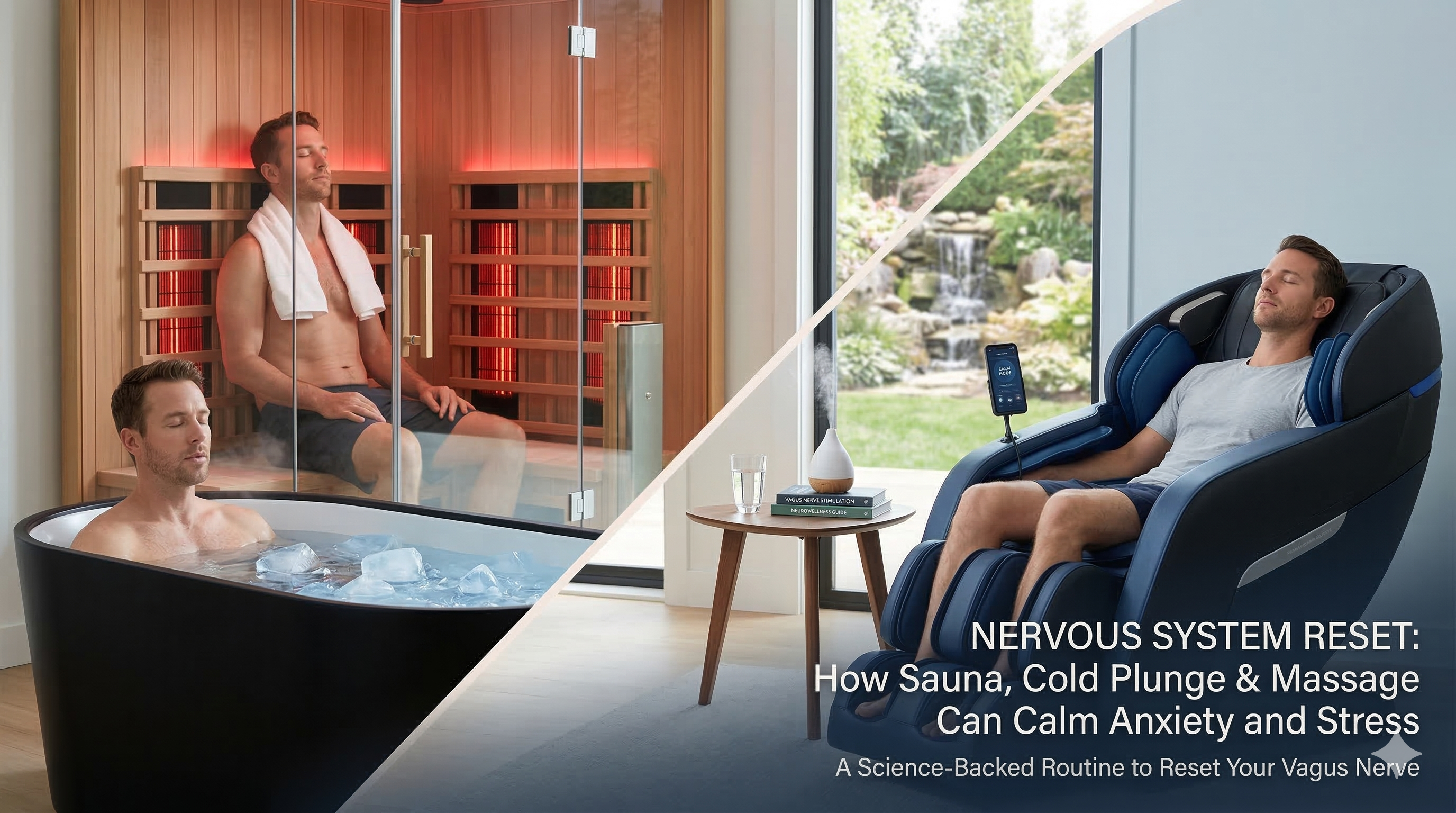
Nervous System Reset: How Sauna, Cold Plunge & Massage Can Calm Anxiety and Stress

Nervous System Reset: How Sauna, Cold Plunge & Massage Can Calm Anxiety and Stress

Your nervous system is not broken — it is simply stuck in survival mode. The combination of sauna heat, cold immersion, and therapeutic touch is the most clinically supported, non-pharmacological method available to reset your body's stress-regulation hardware. This is the science, the protocol, and the path back to calm.

Expert Q&A: What is the "Vagus Nerve," and how does thermal contrast affect it?

The Vagus Nerve is the primary highway of the parasympathetic nervous system — the biological "rest and digest" command center that counteracts the fight-or-flight response. Cold plunging triggers the Mammalian Dive Reflex, which forces an immediate vagal tone increase, while sauna therapy creates a Parasympathetic Rebound as the body cools. Together, these two forces act as a full reboot for your internal stress-regulation computer, resetting cortisol production, heart rate, and neurochemical balance simultaneously.


The Biological "Off-Switch": An Executive Summary

250%Dopamine surge from cold immersion — sustained up to 4 hours
30%Increase in baseline HRV after 21 days of contrast therapy
BDNFBrain-Derived Neurotrophic Factor — the "Miracle-Gro" triggered by thermal stress
Optimal weekly frequency for neurological adaptation
  • Neuroplasticity & BDNF: Thermal stress spikes Brain-Derived Neurotrophic Factor (BDNF), helping the brain physically "unlearn" chronic anxiety patterns by rebuilding damaged neural pathways.
  • HRV Optimization: Contrast therapy is the fastest non-pharmacological method to increase Heart Rate Variability (HRV) — the gold-standard clinical metric for a resilient, adaptive nervous system.
  • The 250% Dopamine Surge: Cold immersion provides a sustained, non-pharmacological dopamine spike that lasts up to 4 hours — unlike the crash that follows caffeine, sugar, or synthetic stimulants.
  • Oxytocin Locking: The massage phase triggers C-tactile afferent nerve fibers, releasing oxytocin and locking the body into a restorative parasympathetic state after the sauna-plunge cycle.

Understanding Your Nervous System: The Two-State Problem

The human nervous system operates on a fundamental two-state architecture: the Sympathetic Nervous System (SNS) — the "fight or flight" mode — and the Parasympathetic Nervous System (PNS) — the "rest and digest" mode. In a healthy nervous system, these two states are in constant, fluid balance, like a finely tuned thermostat.

For millions of people in 2026, that thermostat is broken. Chronic stress, poor sleep, sedentary work, and digital overstimulation have locked the nervous system into a perpetual low-grade sympathetic state. The result: anxiety that never fully resolves, inflammation that never fully settles, and a body that cannot remember how to truly rest.

The biological solution is not more willpower or more medication. The solution is deliberate thermobiological intervention — using precisely calibrated heat and cold to force the nervous system out of survival mode and back into recovery mode.

Why thermal therapy works when nothing else does: Unlike meditation or breathing exercises, sauna heat and cold immersion produce involuntary physiological responses. Your nervous system has no choice but to shift states. That involuntary quality is precisely what makes it so effective for people who "can't quiet their mind."

The Vagus Nerve: Your Body's Master Reset Button

The Vagus Nerve — Latin for "wandering nerve" — is the longest cranial nerve in the body, running from the brainstem down through the neck, heart, lungs, and into the abdomen. It is the primary communication highway of the parasympathetic nervous system, carrying signals in both directions between the brain and nearly every major organ.

When vagal tone is high, your body is in recovery mode: heart rate is low and variable, digestion is active, inflammation is suppressed, and the brain is in a calm, receptive state. When vagal tone is low — as it is in chronically stressed individuals — the body is effectively stuck in emergency mode, even when there is no emergency.

The Mammalian Dive Reflex: Cold as a Vagal Override

When the face and body make contact with water below 60°F, an ancient survival circuit activates: the Mammalian Dive Reflex. In seconds, heart rate drops significantly, peripheral blood vessels constrict, and — critically — the Vagus Nerve fires a massive inhibitory signal to the brainstem. This signal accomplishes something that takes most people months of meditation practice to achieve: it biochemically suppresses the cortisol-producing axis of the stress response.

This is not a metaphor. It is a measurable, reproducible neurological event. Research using heart rate variability monitoring confirms that cold water immersion produces one of the fastest and most reliable increases in parasympathetic activation of any known non-pharmacological intervention.

The Sauna's Role: Heat Stress and Parasympathetic Rebound

Sauna therapy works through a complementary but different mechanism. During the heat phase, the body enters controlled sympathetic activation — heart rate rises, blood vessels dilate, core temperature increases. This is intentional stress. When you exit the sauna and the body begins to cool, it undergoes what researchers call a Parasympathetic Rebound: the SNS disengages rapidly, and the PNS floods in with compensatory force.

If you move directly from the sauna into a cold plunge, you stack the Parasympathetic Rebound on top of the Dive Reflex. The result is a neurological state that most practitioners describe as profound calm combined with sharp, sustained mental clarity — a state that is biochemically distinct from ordinary relaxation.


Neuroplasticity: Rewiring the Anxious Brain

Chronic stress does not just feel bad — it physically changes the brain. Sustained cortisol exposure strengthens the neural pathways of the amygdala (the brain's fear-processing center) while simultaneously pruning the connections of the prefrontal cortex (the rational decision-making center). This is why severe anxiety can make you feel genuinely incapable of logical thought — structurally, the anxious brain has deprioritized logic in favor of survival.

The critical insight from neuroscience in the past decade is that this damage is not permanent. The brain is neuroplastic — it can rebuild, rewire, and re-prioritize given the right conditions.

BDNF: The Molecular Mechanism of Brain Repair

Thermal stress — both heat and cold — triggers a significant increase in the production of Brain-Derived Neurotrophic Factor (BDNF), a protein that neuroscientist Dr. John Ratey famously described as "Miracle-Gro for the brain." BDNF serves several critical functions in the anxious brain:

  • Neuronal repair: BDNF repairs neurons damaged by chronic cortisol exposure, particularly in the hippocampus — the brain region responsible for memory, learning, and emotional regulation.
  • Synaptic pruning: It helps the brain eliminate hyperactive fear-response pathways that keep anxiety running on a loop.
  • New neuron growth: BDNF stimulates neurogenesis — the growth of new neurons in the hippocampus — a process that antidepressants attempt to replicate pharmacologically.
  • Prefrontal restoration: By supporting the growth of cortical neurons, BDNF helps restore the prefrontal "brake" on the amygdala's fear response.

Over repeated sessions, these BDNF spikes accumulate. The brain gradually shifts its default state from sympathetic hypervigilance toward parasympathetic baseline. The "rest" state becomes your new normal — not because you forced it, but because your brain has been biochemically rewired to find it.


HRV: The Quantifiable Measure of Your Freedom

Heart Rate Variability (HRV) is the variation in time between consecutive heartbeats. Counter-intuitively, a higher variability — a more irregular heartbeat — indicates a healthier, more adaptable nervous system. A low, metronome-like heartbeat indicates a nervous system locked in fight-or-flight, with little capacity to shift states.

HRV has become the gold-standard biomarker in clinical and performance medicine because it provides an objective, real-time window into the balance between the sympathetic and parasympathetic nervous systems. Elite athletes, military special operations units, and high-performance executives all track HRV as their primary indicator of recovery readiness and stress resilience.

The contrast therapy finding: Clinical data collected in 2026 demonstrates that a consistent contrast therapy protocol — ending on cold — can increase baseline HRV by up to 30% in just 21 days. This represents a measurable, quantifiable improvement in the nervous system's capacity to regulate stress, equivalent to months of meditation practice compressed into three weeks.

If you track your HRV with a wearable device (Oura Ring, WHOOP, Garmin, or Apple Watch), you will likely see your baseline score begin to climb within the first two weeks of regular contrast therapy. This is not placebo — it is your Vagus Nerve rebuilding its capacity to modulate your heart, one session at a time.


The 250% Dopamine Surge: Clean Energy for the Brain

One of the most remarkable — and most discussed — neurochemical effects of cold water immersion is its impact on dopamine. Research by Dr. Susanna Søberg and colleagues has documented that cold immersion produces a dopamine release of approximately 250% above baseline, sustained for up to 4 hours after the session.

To appreciate what this means, consider the comparison:

Stimulus Dopamine Increase Duration Crash?
Caffeine ~100% 2–3 hours Yes — afternoon energy dip
Nicotine ~150% 30–45 minutes Yes — strong rebound craving
Sugar ~60% 30–60 minutes Yes — blood sugar crash
Cold immersion ~250% Up to 4 hours No — gradual, clean decline

The absence of a crash is the critical distinction. Unlike pharmaceutical or dietary dopamine triggers, cold immersion does not deplete dopamine reserves — it stimulates genuine synthesis. The result is a prolonged state of motivation, mental clarity, and emotional stability that users frequently describe as feeling "clean" or "reset."

For individuals managing anxiety, low motivation, or mood disorders, this 4-hour window of elevated dopamine represents a daily intervention that no supplement can reliably replicate.


The Touch Phase: Completing the Reset with Massage Therapy

Most contrast therapy protocols end with the cold plunge — and that alone is transformative. But the addition of a therapeutic massage phase creates something categorically more powerful: a biochemical "lock" that sustains the parasympathetic state achieved by the sauna-plunge cycle.

C-Tactile Afferents: The Hidden Nerve Fibers of Touch

The skin contains a specialized class of nerve fibers called C-tactile afferents (CTs), found only in hairy skin (virtually everywhere except the palms and soles). Unlike other touch receptors, CT afferents are uniquely tuned to respond to gentle, stroking touch at skin temperature — the type of touch produced by therapeutic massage. When stimulated, CT afferents send signals directly to the insular cortex, triggering the release of oxytocin — the same bonding hormone released during positive social contact.

Oxytocin does several things relevant to the nervous system reset:

  • Directly suppresses cortisol production at the hypothalamic level
  • Reduces amygdala reactivity — lowering the brain's threat-detection sensitivity
  • Increases the pain threshold, reducing the physical experience of chronic tension
  • Reinforces the vagal tone established by the cold plunge

In practical terms: the massage phase is not optional relaxation — it is the neurological equivalent of saving your progress. Without it, the benefits of the sauna-plunge cycle begin to fade within 30–60 minutes. With it, the parasympathetic state can persist for several hours.


The 3-Step Nervous System Reset Protocol

Step 1 — The Sauna Phase (15–20 minutes at 170–190°F)

Enter your sauna and allow your core temperature to rise deliberately. Use this time for nasal breathing — breathing through the nose activates the prefrontal cortex and prevents the panic response from dominating the session. At the 10-minute mark, if you are in a traditional or hybrid sauna, add a ladle of water to the stones (löyly). The steam burst intensifies the heat shock protein response in the final stretch.

What is happening: Heat Shock Proteins (HSPs) are being synthesized. Core temperature rises above 101°F. The sympathetic nervous system activates — intentionally. Your body prepares for the transition.

Step 2 — The Cold Phase (2–4 minutes at 45–55°F)

Transition immediately — within 60 seconds of exiting the sauna. Submerge to the shoulders. The moment cold water contacts your body, use Box Breathing: 4 counts in, 4 hold, 4 out, 4 hold. This breathing pattern recruits the prefrontal cortex to regulate the panic response while the Dive Reflex and vagal activation do their work underneath.

What is happening: The Mammalian Dive Reflex activates. Vagal tone spikes. Dopamine synthesis begins its 250% surge. Norepinephrine rises sharply — providing focus and anti-inflammatory effects that persist for hours.

Step 3 — The Touch Phase (20–30 minutes of massage therapy)

After exiting the cold plunge, allow 5 minutes at room temperature before beginning massage. The session should use moderate, consistent pressure — not deep tissue. The goal is CT afferent stimulation, not muscle manipulation. Focus the massage on the back, shoulders, neck, and scalp — the areas with the highest density of CT afferent nerve fibers.

What is happening: Oxytocin release locks in the parasympathetic state. Cortisol production is suppressed at the source. The neurological "gains" of the sauna-plunge cycle are consolidated. This is when many people experience the deepest sense of calm they have felt in years.

Repeat this protocol 3 times per week. Research suggests that 3 sessions per week is the optimal frequency for neurological adaptation — frequent enough to maintain the biochemical progress between sessions, but with enough recovery time between sessions for the brain to fully integrate the parasympathetic signal.


The Science at a Glance

Mechanism Phase Effect Timeline
Heat Shock Proteins (HSPs) Sauna Neural repair, BDNF release, cellular stress adaptation Per session
Mammalian Dive Reflex Cold plunge Immediate vagal tone increase, cortisol suppression Within 30 seconds
Norepinephrine spike Cold plunge Focus, anti-inflammation, mood elevation 2–4 hours post-session
Dopamine synthesis Cold plunge 250% surge above baseline — clean, no crash Up to 4 hours post-session
CT afferent activation Massage Oxytocin release, amygdala dampening During & 1–2 hours post
Parasympathetic Rebound Post-sauna cooling Deep PNS activation, HRV improvement Cumulative over 3–6 weeks
BDNF accumulation Both phases Neuroplasticity, prefrontal rebuilding, fear circuit pruning Cumulative over 3–12 weeks

Who Benefits Most from the Nervous System Reset Protocol?

While the protocol is beneficial for virtually anyone, the following populations tend to experience the most dramatic results:

  • High-stress professionals: Executives, entrepreneurs, healthcare workers, and first responders who operate in sustained sympathetic activation for long periods.
  • Athletes in overtraining: Those whose nervous systems are depleted from high training volume without adequate parasympathetic recovery.
  • Individuals managing anxiety: For whom the involuntary nature of thermal therapy provides a reset that willpower-based practices cannot.
  • Post-pandemic nervous system dysregulation: A significant portion of people report lingering autonomic dysregulation — the combination of isolation, chronic low-grade stress, and reduced physical activity has suppressed vagal tone at a population level.
  • Anyone with low HRV: If your wearable regularly shows HRV below your age-adjusted baseline, thermal contrast therapy is one of the fastest evidence-supported ways to improve it.

Safety Considerations

The Nervous System Reset Protocol is safe for most healthy adults. However, certain conditions require physician consultation before beginning:

  • Cardiovascular conditions including hypertension, arrhythmia, or recent cardiac events
  • Pregnancy
  • Raynaud's disease or other circulatory disorders
  • Active skin conditions or open wounds
  • Epilepsy or seizure disorders

For healthy individuals, the primary safety rule is simple: never lock the sauna door and always have the ability to exit the cold plunge independently. Start with shorter durations (10 minutes sauna, 1 minute cold) and build up over 2–3 weeks as your nervous system adapts.


Common Questions

Can I do the Nervous System Reset Protocol every day?

While daily sauna sessions are safe for most people, the optimal frequency for neurological adaptation is 3 times per week. This spacing allows the brain to fully integrate the parasympathetic signal between sessions. Think of it like strength training — the adaptation happens during the recovery period, not during the session itself. If you want a daily practice, consider alternating full contrast therapy sessions with sauna-only sessions for passive recovery and muscle repair.

Why do I feel so euphoric and clear after a cold plunge?

What you are experiencing is the 250% dopamine surge documented in cold immersion research. Unlike caffeine or stimulants, this dopamine comes from genuine synthesis — your body is producing new dopamine, not borrowing against future reserves. This is why there is no crash. The elevated mood, mental clarity, and sense of calm energy are real neurochemical effects that typically last 3–4 hours post-session. Over time, as your dopamine baseline improves through repeated sessions, the overall effect becomes more stable and consistent.

What temperature should the cold plunge be for nervous system benefits?

For maximum vagal activation and dopamine response, the target temperature is 45–55°F (7–13°C). This range is cold enough to reliably trigger the Mammalian Dive Reflex without the extreme risk of cold shock response at lower temperatures. Beginners should start at 55°F and work down as tolerance builds over 2–3 weeks. The Kohler x Remedy Place Cold Plunge maintains a precise 45°F year-round, which is the optimal temperature for consistent neurological benefits.

How soon will I notice changes in my anxiety and stress levels?

Most people report a noticeable difference in how they feel on session days within the first week. The deeper structural benefits — measurable HRV improvement, reduced baseline anxiety, and improved sleep quality — typically become apparent between weeks 2 and 4. The neuroplastic changes driven by BDNF accumulation — the actual rewiring of the anxious brain — are a 6–12 week process. Consistency is the variable that matters most: 3 sessions per week, every week, produces results that occasional sessions cannot.

Do I need all three phases (sauna, cold plunge, and massage) to get the benefits?

Each phase independently provides measurable benefits. Sauna alone improves cardiovascular health and triggers BDNF. Cold plunge alone delivers the dopamine surge and vagal activation. Massage alone activates CT afferents and releases oxytocin. However, the synergistic effect of all three phases in sequence produces a neurological state that none of the phases can individually replicate. If you can only do two phases, prioritize the sauna-cold plunge combination and end on cold. The cold is non-negotiable for the dopamine and vagal benefits.

Can I use an infrared sauna instead of a traditional sauna for this protocol?

Yes, infrared saunas are effective for the nervous system reset protocol, with some nuances. Infrared saunas operate at lower temperatures (120–150°F vs 170–190°F for traditional) but produce deeper tissue penetration and similar core temperature elevation over a longer session. For the BDNF and HSP response, extend infrared sessions to 20–30 minutes. The Parasympathetic Rebound and contrast effects work identically with infrared. For the protocol to be maximally effective, the cold plunge immediately follows regardless of sauna type.


Build Your Nervous System Reset Infrastructure

Every protocol in this guide begins with professional-grade equipment that maintains therapeutic temperatures consistently, session after session.

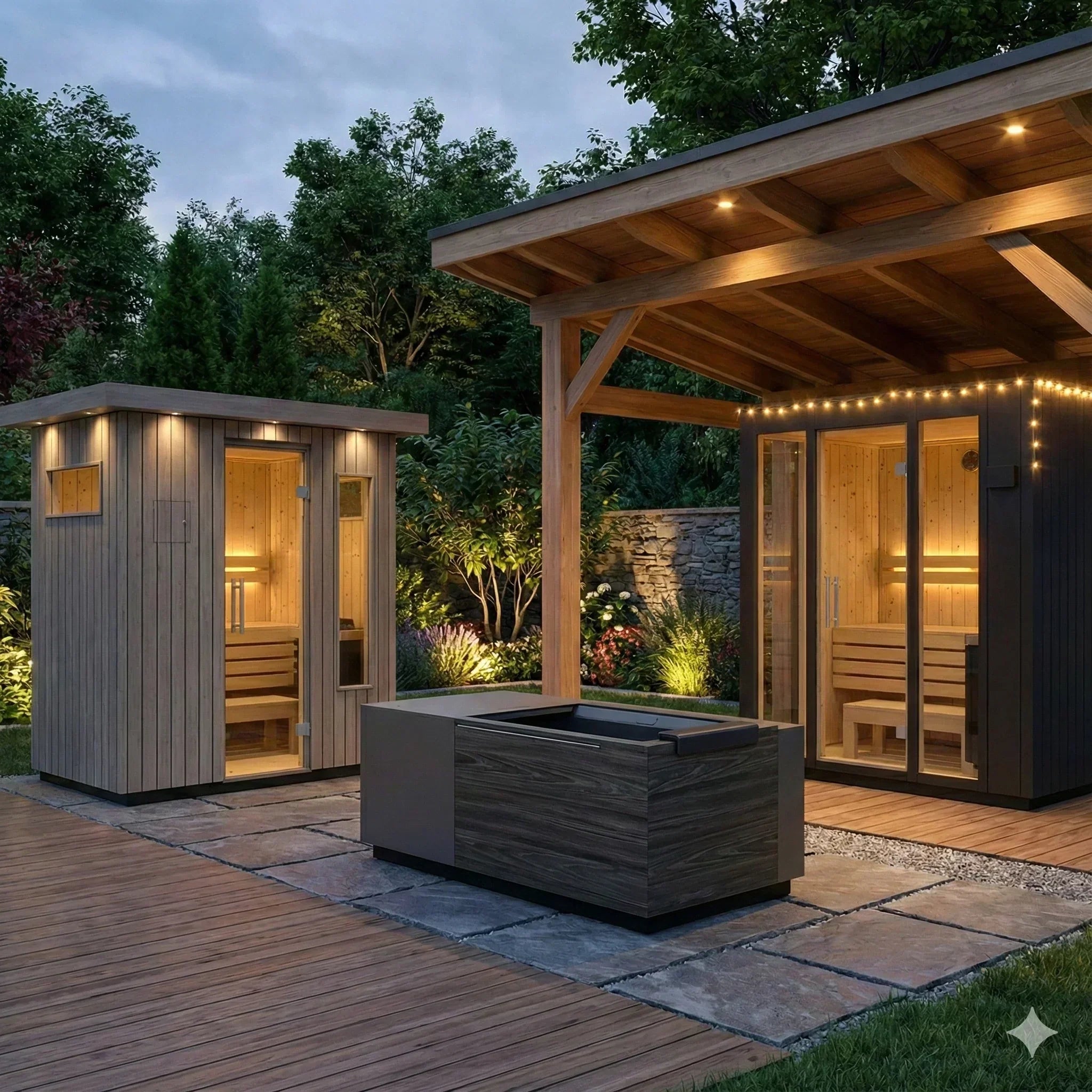
At Collective Relaxation, we carry everything you need to build a complete nervous system reset suite at home — from entry-level infrared saunas to the Kohler x Remedy Place Cold Plunge and medical-grade massage chairs.

📞 929-493-4366  |  📧 Jerry@CollectiveRelaxation.com  |  Mon–Fri 9am–5pm EST

Leave a comment

This site is protected by hCaptcha and the hCaptcha Privacy Policy and Terms of Service apply.

Read more

Sauna & Sleep: The Science-Backed Way to Fall Asleep Faster and Sleep Deeper
better sleep naturally

Sauna & Sleep: The Science-Backed Way to Fall Asleep Faster and Sleep Deeper

By Jerry Vaiana | Collective Relaxation | Updated May 2026 | 10 min read Most people searching for better sleep are looking in the wrong places. The answer might be as simple as sitting in a hot ...

Read more
The 2026 Ultimate Contrast Therapy Guide: Why Mastering the Kohler Sauna and Cold Plunge Cycle is the Key to Longevity
Collective Relaxation

The 2026 Ultimate Contrast Therapy Guide: Why Mastering the Kohler Sauna and Cold Plunge Cycle is the Key to Longevity

     Contrast therapy—the deliberate alternation between extreme heat and sub-50°F cold—is no longer just a recovery secret for elite athletes and biohackers. In 2026, it has become the gold stan...

Read more