Cold Plunge Before or After Sauna: What Science Says About Contrast Therapy
Cold plunge before or after sauna — it sounds like a simple question, but the answer reveals one of the most powerful physiological mechanisms in modern wellness science. The sequence you choose determines whether you are triggering fat burning, maximizing dopamine, or optimizing nervous system recovery. Here is what the 2026 clinical data actually says, and the exact protocol to get the most out of every session.
The Science Verdict
Always end on cold. The research is clear: finishing with a cold plunge and then warming naturally — without a heater — activates brown fat, maximizes the dopamine surge, and locks in the metabolic benefits for up to 3 hours post-session.
Why the Sequence Matters More Than You Think
Most people approach contrast therapy as simply alternating between hot and cold. While that alone produces significant benefits, the order and transition timing between heat and cold determines which physiological systems you activate and how intensely they respond.
The body does not respond to heat and cold as isolated experiences. It responds to the transition — the sharp contrast between the two states. That transition triggers a cascade of neurochemical, cardiovascular, and metabolic responses that are far more powerful than either temperature alone. Understanding which transition to end on, and why, is the foundation of an effective contrast therapy protocol.
The Key Research Points: What Science Says in 2026
- Systemic Circulation: The combination of steam, sauna, and cold plunge boosts blood circulation, decreases inflammation, and speeds up muscle repair more effectively than any single thermal modality.
- Vascular Pumping: The hot-to-cold exposure causes vasodilation followed by vasoconstriction, acting as a "vascular pump" that delivers nutrients to muscle tissue and flushes metabolic waste.
- Cognitive Clearing: Thermal stress activates the glymphatic system — the brain's waste-removal mechanism — reducing brain fog and protecting long-term cognitive health.
- Neurochemical Spike: Cold plunges trigger a 250% release of norepinephrine, enhancing mood, focus, and pain tolerance for hours post-session.
- Hormonal Optimization: Structured protocols can increase immune function by up to 40% and trigger significant spikes in human growth hormone (HGH) — a key driver of muscle repair and metabolic health.

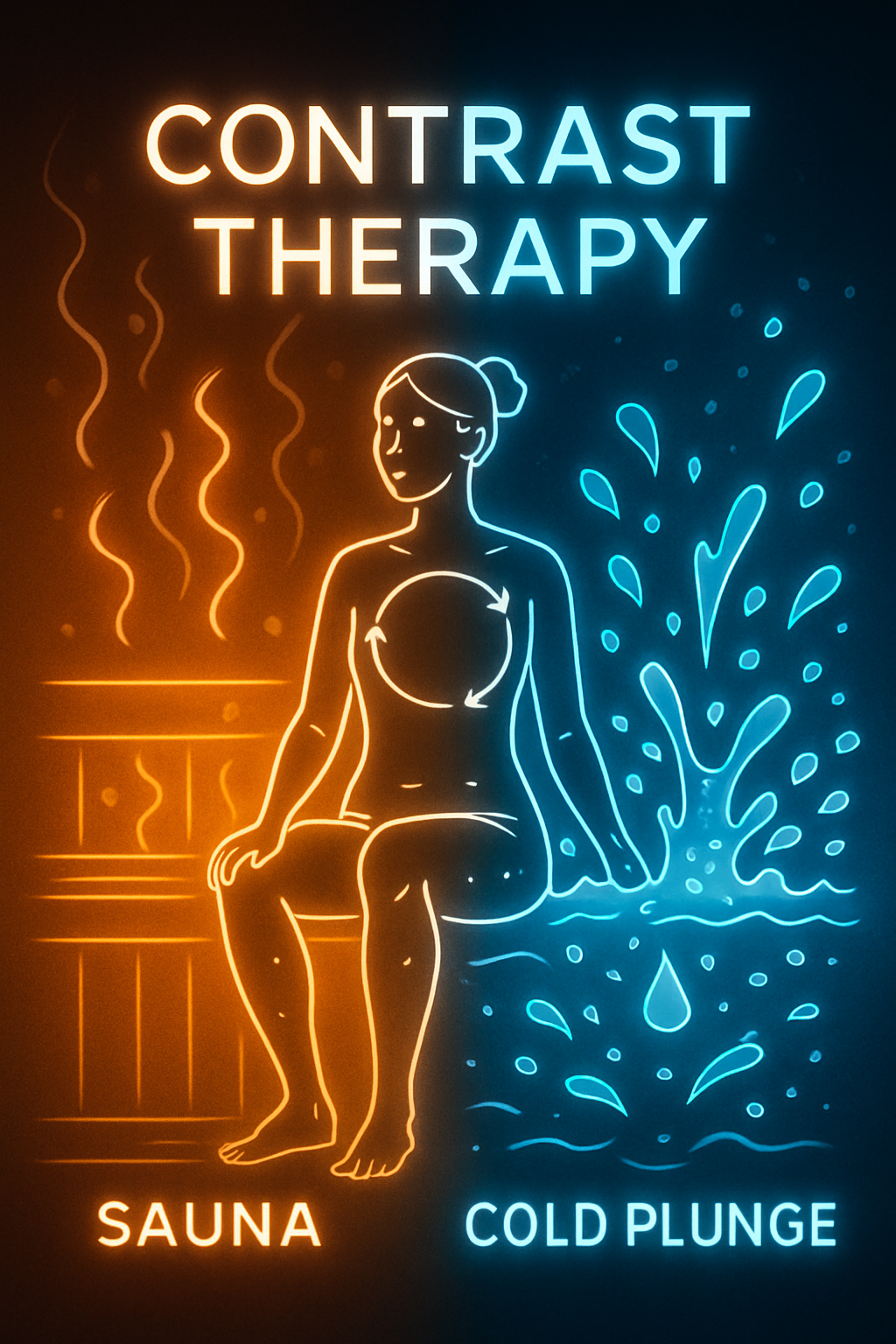
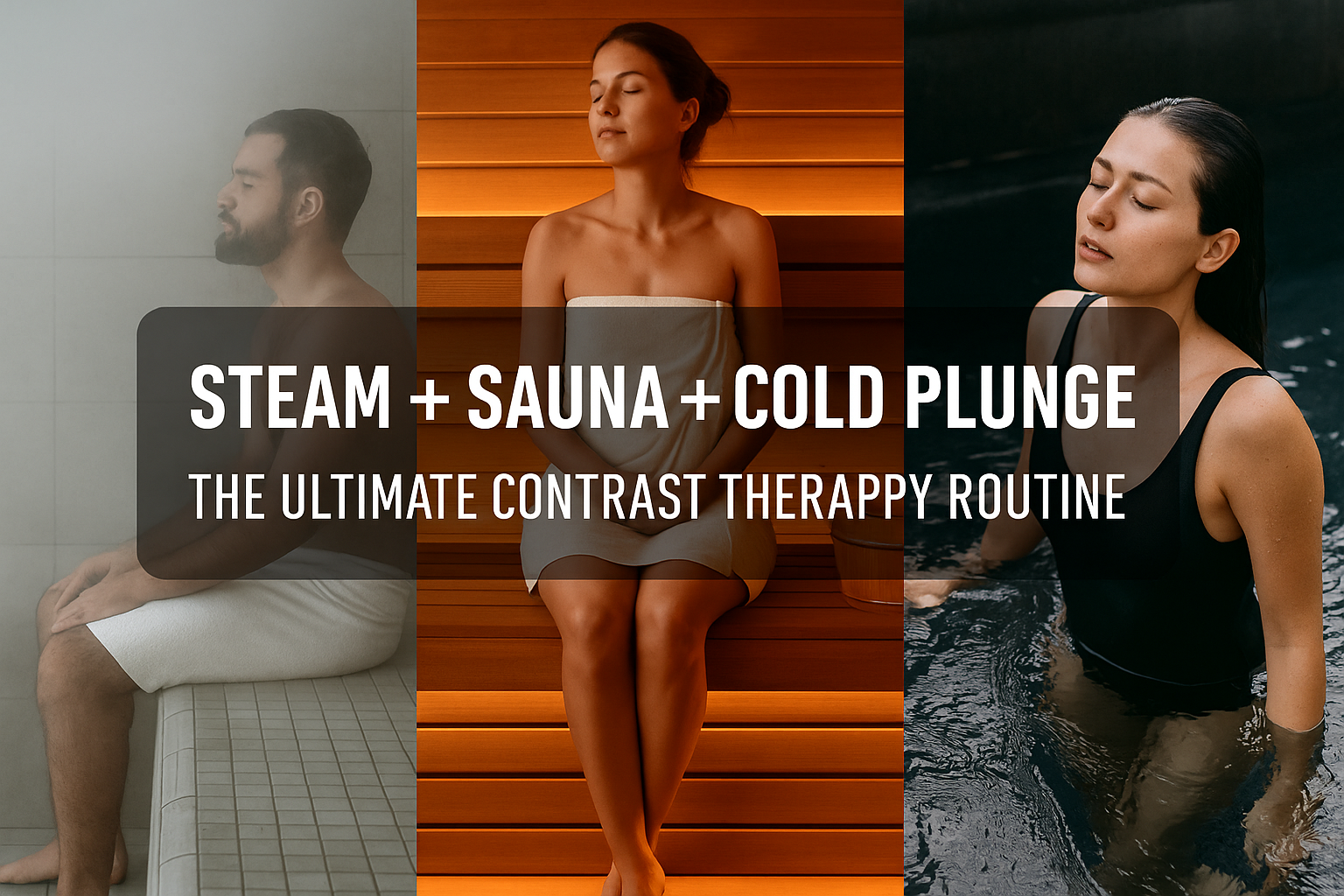
The contrast therapy cycle — the sequence and transition timing determine which physiological systems activate and how powerfully.
The Biological Engine: Endothelial Strength and Vascular Shunting
The transition from intense sauna heat to cold plunge triggers a phenomenon known as vascular shunting. In the heat, your body undergoes vasodilation — blood vessels expand and blood rushes to the skin's surface to dissipate heat. The moment you enter cold water, rapid vasoconstriction occurs, forcing that blood back to your vital organs to protect your core temperature.
This mechanical "pumping" action does three things simultaneously. It flushes the lymphatic system, accelerates the removal of metabolic waste like lactic acid from fatigued muscles, and — critically — strengthens the endothelial lining of your blood vessels. Research from 2026 suggests that by forcing vessels to open and close repeatedly, you are training your circulatory system to be more resilient — essentially performing "weightlifting" for your arteries, reducing cardiovascular disease risk over time.

Vascular shunting in action — the contrast between heat-driven vasodilation and cold-driven vasoconstriction creates a cardiovascular training stimulus with every session.
Why Cold After Sauna Maximizes the Vascular Response
The vascular shunting response is most powerful when you move immediately from sauna to cold — within 60 seconds or less. The larger the temperature differential and the faster the transition, the more forceful the vasoconstriction and the more powerful the lymphatic flush. This is why seasoned practitioners skip the room-temperature shower between phases entirely once they have built up tolerance.
Thermal Stress and Cognitive Longevity: Clearing the Glymphatic System
One of the most significant breakthroughs in thermal research involves the Glymphatic System — the brain's unique waste-clearance mechanism. During the day, metabolic byproducts including amyloid-beta proteins (linked to Alzheimer's disease) accumulate in the brain's interstitial spaces.
While the glymphatic system is primarily active during deep sleep, the intense vascular pressure changes from contrast therapy act as a "mechanical flush" for the central nervous system. By alternating heat and cold, you stimulate the flow of cerebrospinal fluid, helping clear neurotoxic waste from the brain. This process not only reduces brain fog immediately post-session but serves as a critical preventative measure for long-term cognitive health — one of the most compelling reasons to build contrast therapy into a daily or near-daily practice.
The Søberg Principle: Always End on Cold
Research led by Dr. Susanna Søberg has become the most cited framework in modern contrast therapy. Her core finding: to maximize metabolic benefits, you should always end your session with cold — and then allow your body to warm up naturally without a heater, hot shower, or external heat source.
Here is the mechanism: when you exit the cold plunge and begin warming at room temperature, your body activates Brown Adipose Tissue (BAT) — commonly called brown fat. Unlike white fat, which stores energy, brown fat is thermogenic — its primary function is to burn calories to generate heat. By forcing your body to find its own thermal equilibrium after cold immersion, you spike your metabolic rate for up to 3 hours post-session.
This process simultaneously increases the density of mitochondria — the energy-producing organelles in your cells. More mitochondria means more cellular energy capacity, which translates to sustained energy levels, improved athletic performance, and better metabolic health over the long term.
| Ending On | Brown Fat Activation | Dopamine Peak | Metabolic Spike | Recommended For |
|---|---|---|---|---|
| Cold (correct) | ✅ Yes — body warms naturally | ✅ Full 250% surge sustained | ✅ Up to 3 hours | Everyone — default protocol |
| Heat (incorrect) | ❌ Suppressed — external heat used | ⚠️ Partially blunted | ❌ Minimal | Not recommended for metabolic goals |
The Vagus Nerve Reset: Neurological Resilience
Submerging your body in cold water triggers the Vagus Nerve — the primary component of the parasympathetic nervous system and the body's main "rest and digest" pathway. This cold-triggered Vagal activation forces a biochemical reset of your stress response, transitioning the body from a high-cortisol sympathetic state into a calm, restorative parasympathetic state.
Over repeated sessions, this training increases your Vagal Tone — the baseline efficiency of your vagal pathway. Higher vagal tone means your nervous system can shift out of stress mode faster, recover from emotional and physical stressors more effectively, and maintain a higher baseline Heart Rate Variability (HRV). HRV is the gold-standard clinical metric for nervous system resilience, and contrast therapy is one of the fastest non-pharmacological methods to improve it.

A complete home contrast therapy setup — the proximity of sauna and cold plunge is essential for maintaining the sharp thermal transition that drives the vascular and neurological response.
Before vs. After: The Full Comparison
| Factor | Cold Before Sauna | Cold After Sauna ✅ |
|---|---|---|
| Brown fat activation | Minimal — body immediately reheats | Maximum — natural warming activates BAT |
| Dopamine response | Moderate — partially blunted by subsequent heat | Full 250% surge sustained post-session |
| Vascular training | Partial — vasoconstriction then immediate dilation | Full pump — dilation then forceful constriction |
| Metabolic rate post-session | Minimal elevation | Up to 3-hour spike |
| Nervous system state | Alert then relaxed — mixed signal | Deeply parasympathetic — clean reset |
| HGH release | Moderate — heat phase contributes | Maximum — cold amplifies heat-triggered HGH |
| Recommended for | Pre-workout activation only | Recovery, longevity, daily wellness |
The Exact Protocol: Beginner and Advanced
Beginner Protocol — Weeks 1–3
- Sauna — 10–12 minutes at 150–165°F: Sit on the lower bench. Focus on nasal breathing. Allow your body to adjust to the heat before pushing the duration.
- Transition — 60–90 seconds: Walk directly to the cold plunge. A brief room-temperature shower is acceptable in the first two weeks.
- Cold Plunge — 1–2 minutes at 50–55°F: Submerge to the shoulders. Use 4-count inhale / 4-count exhale breathing to override the panic reflex.
- Natural Warm-Up — 5–10 minutes: Sit at room temperature. Do NOT use a heater or hot shower. Let your body warm itself — this is when brown fat activates.
- Repeat 2 rounds. Always end on cold.
Frequency: 2–3 times per week. Build to 3 rounds and longer durations over weeks 2–3.
Advanced Protocol — The Søberg Minimums
- Sauna — 15–20 minutes at 175–190°F: Upper bench. Add löyly (ladle of water on stones) at the 10-minute mark for maximum heat shock protein response. Diaphragmatic breathing throughout.
- Immediate Transition — under 60 seconds: Move directly to the cold plunge. No shower. No delay. The sharper the contrast, the stronger the physiological response.
- Cold Plunge — 2–4 minutes at 45–50°F: Box Breathing — 4 in, 4 hold, 4 out, 4 hold. Keep hands submerged — high density of cold receptors amplifies the norepinephrine response.
- Natural Warm-Up — 10 minutes at room temperature. No external heat. This is your brown fat window.
- Repeat for 3 full rounds. Always end on cold.
Weekly target: 3 sessions accumulates 11+ minutes cold and 57+ minutes heat — the Søberg Minimums for measurable metabolic benefit.
Safety: Who Should Be Cautious
Contrast therapy is safe for the vast majority of healthy adults. However, certain conditions require physician consultation before starting:
- Cardiovascular conditions including hypertension, arrhythmia, or recent cardiac events
- Pregnancy
- Raynaud's disease or other circulatory disorders
- Epilepsy or seizure disorders
- Active skin conditions or open wounds
The primary safety rule for beginners is simple: never lock the sauna door, always be able to exit the cold plunge independently, and build duration gradually over 2–3 weeks. Never push through dizziness, nausea, or chest discomfort.
Frequently Asked Questions
Is it better to cold plunge before or after using the sauna?
The research is clear: end with cold. Cold after sauna activates brown adipose tissue during natural rewarming, maximizes the dopamine and norepinephrine surge, and produces the strongest vascular training response. The only exception is a brief pre-workout cold plunge (60–90 seconds) to activate the nervous system before training — but for recovery, metabolic, and longevity goals, always finish cold.
How many rounds of contrast therapy should I do?
Most research suggests 2–3 rounds of 15–20 minutes in the sauna followed by 2–4 minutes in the cold plunge for each round. Beginners should start with 2 rounds at more moderate temperatures (150–165°F sauna, 50–55°F cold) and build to 3 rounds over 2–3 weeks. The Søberg Minimums — 11 minutes total cold and 57 minutes total heat per week — represent the threshold for measurable metabolic and cardiovascular benefits.
Does contrast therapy help with cognitive health?
Yes — through two distinct mechanisms. First, thermal stress stimulates the glymphatic system, the brain's waste-clearance network, helping flush neurotoxic proteins like amyloid-beta that accumulate during the day. Second, the 250% norepinephrine spike from cold immersion enhances focus and reduces neuroinflammation. Long-term Finnish studies on sauna use alone have shown a significantly reduced risk of dementia, and cold immersion amplifies these neuroprotective effects.
How long should I wait between the sauna and cold plunge?
For maximum contrast response, transition within 60 seconds or less. Experienced practitioners move immediately — within 30 seconds — with no intervening shower or rest period. Beginners can take up to 90 seconds and may use a brief room-temperature shower in the first two weeks. The sharper and faster the thermal transition, the more powerful the vascular shunting and neurochemical response.
What temperature should the cold plunge be for contrast therapy?
The optimal range for contrast therapy is 45–55°F (7–13°C). This is cold enough to reliably trigger the Mammalian Dive Reflex, the Vagus Nerve reset, and the full norepinephrine surge without the extreme shock risk of sub-40°F temperatures. Beginners should start at 55°F and work down as tolerance builds. The Kohler x Remedy Place Cold Plunge maintains a precise 45°F year-round — the optimal temperature for consistent results.
Can I use a steam room instead of a sauna for contrast therapy?
Yes — a steam room produces similar vasodilation, heat shock protein synthesis, and sympathetic nervous system activation. The key difference is that steam rooms operate at lower temperatures (110–120°F) with 100% humidity, while traditional saunas reach 170–190°F at low humidity. Both trigger the Parasympathetic Rebound when followed by cold immersion. For maximum Heat Shock Protein response and cardiovascular stimulus, traditional sauna at higher temperatures is more effective. For skin hydration and respiratory benefits, steam rooms have their own advantages.
How soon after contrast therapy can I work out?
For recovery-focused sessions (post-workout), there is no waiting period — contrast therapy is designed to accelerate the recovery process immediately. For strength-building goals, some research suggests waiting 4–6 hours before heavy resistance training after cold immersion, as the anti-inflammatory response can temporarily blunt the muscle protein synthesis signal. For endurance athletes and general wellness, contrast therapy before or after training produces no negative effects and significantly accelerates next-day recovery.
Build Your Contrast Therapy Setup at Home
Every protocol in this guide requires equipment that holds therapeutic temperatures consistently — session after session. Collective Relaxation carries the full range of professional-grade saunas, cold plunges, and recovery tools.
📞 929-493-4366 | 📧 Jerry@CollectiveRelaxation.com | Mon–Fri 9am–5pm EST
Written by Jerry Vaiana — About Jerry


Leave a comment
This site is protected by hCaptcha and the hCaptcha Privacy Policy and Terms of Service apply.