"Infrared Sauna Chromotherapy Guide: What Each Color Does & Benefits"
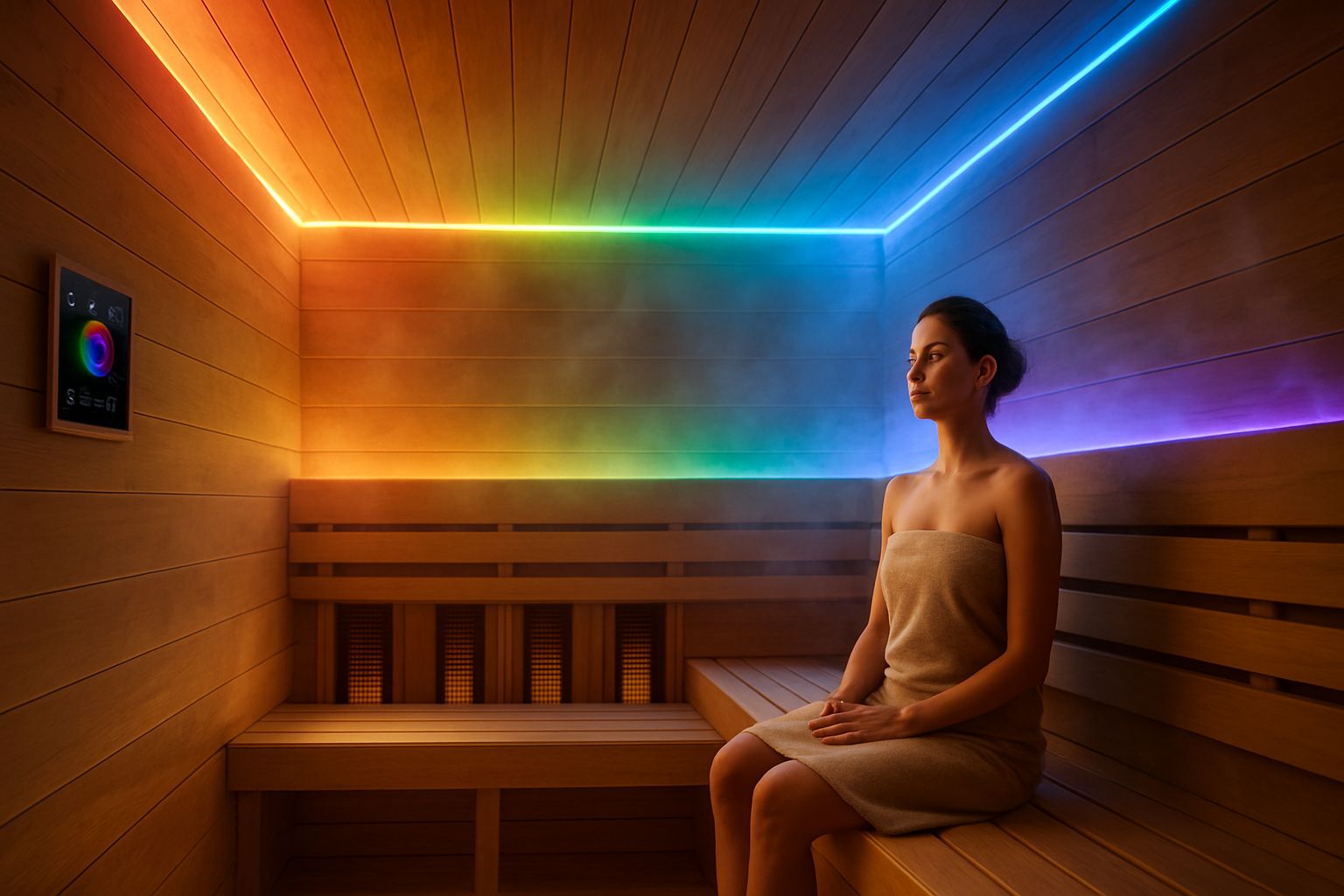
Picture stepping into your infrared sauna and feeling the warmth surround you — then the space shifts to a wash of soothing blue light. Your breathing slows, your shoulders drop, and tension melts faster than with heat alone. This is chromotherapy: the therapeutic use of specific light wavelengths to trigger measurable physiological responses. When combined with infrared sauna heat, the results are amplified in ways neither therapy achieves independently.
Chromotherapy is the use of specific light wavelengths to trigger healing responses. When combined with infrared heat, the body's dilated blood vessels absorb these light frequencies more effectively — enhancing mood, skin health, circulation, and cellular recovery simultaneously. Medical-grade chromotherapy systems in premium infrared saunas emit precise wavelengths at therapeutic intensities, producing consistent, measurable benefits that basic LED mood lighting cannot replicate.
The Science: How Light Frequencies Affect Your Body
Chromotherapy is not new-age speculation — it is based on the measurable fact that different wavelengths of light interact with the body's cells, tissues, and nervous system in distinct biochemical ways. Just as blue light affects sleep cycles and sunlight prompts vitamin D synthesis, specific colored light frequencies trigger specific physiological responses that can be measured and replicated.
Research has documented that different wavelengths of light have specific physiological effects: red light (630–700nm) stimulates cellular energy production via mitochondrial activation, blue light affects melatonin production and cortisol levels, and green light in the mid-spectrum produces autonomic nervous system balancing effects. These are not subjective or cultural associations — they are measurable biochemical responses.
The ancient use of color therapy — in Egyptian healing temples, Chinese medicine, and Ayurvedic practice — reflects millennia of empirical observation of these effects. Modern LED technology in high-quality infrared saunas can now emit precise wavelengths at optimal therapeutic intensities, providing consistent, reproducible benefits that our ancestors approximated with colored cloths and sunlight.

Medical-grade chromotherapy systems emit specific wavelengths at therapeutic intensities — delivering measurable physiological effects beyond basic mood lighting.
Why Infrared Saunas Amplify Chromotherapy Effects
The combination of infrared heat and chromotherapy creates a synergistic effect greater than either therapy alone. When your body is warmed by infrared heat, three key changes occur that amplify light therapy's effectiveness:
- Vasodilation: Blood vessels dilate, increasing circulation and allowing light wavelengths to penetrate deeper into tissues than they can at normal body temperature
- Pore opening: Skin becomes more permeable, enhancing the surface absorption of light energy
- Nervous system receptivity: The body enters a heightened parasympathetic state that is more sensitive to the subtle influences of different color frequencies
Infrared heat activates the body's natural healing processes — triggering Heat Shock Proteins, boosting lymphatic flow, and initiating cellular repair. When you introduce specific light wavelengths into this already-activated system, they can target and amplify specific aspects of the healing response. Red light during an infrared session doesn't just improve circulation — it supercharges already-dilated vessels, delivering dramatically enhanced benefits to tissues and organs.
The Complete Color Guide: What Each Wavelength Does
| Color | Wavelength | Primary Effects | Best Time |
|---|---|---|---|
| 🔴 Red | 630–700nm | Circulation, energy, collagen production, cellular repair | Morning |
| 🟠 Orange | 590–630nm | Creativity, emotional warmth, digestive support, mood lift | Morning |
| 🟡 Yellow | 560–590nm | Mental clarity, serotonin boost, cognitive focus, energy | Morning–midday |
| 🟢 Green | 495–560nm | Balance, anti-inflammation, cardiovascular regulation, stress | Midday |
| 🔵 Blue | 450–495nm | Deep relaxation, pain relief, sleep preparation, cortisol reduction | Evening |
| 🟣 Indigo | 425–450nm | Mental clarity, detox support, immune function, purification | Evening |
| 🔮 Violet | 380–425nm | Neuroplasticity, deep meditation, hormonal balance, transformation | Evening |
Red Light: Circulation, Energy, and Skin Rejuvenation
🔴 Red Light — 630–700nm
Red light stimulates mitochondrial energy production at the cellular level, boosts circulation through vasodilation, and triggers collagen synthesis in skin tissue. In an infrared sauna where blood vessels are already dilated, red light's circulation-enhancing effects are supercharged — delivering more oxygen and nutrients to tissues while accelerating the removal of metabolic waste. This is the most researched wavelength in photobiomodulation, with documented effects on skin rejuvenation, wound healing, and athletic recovery. Best used in morning sessions for energy and post-workout recovery.
Orange Light: Creativity and Emotional Energy
🟠 Orange Light — 590–630nm
Orange light sits between red's physical stimulation and yellow's mental activation — making it the ideal wavelength for stimulating creativity, emotional warmth, and social energy. It activates the sacral energy center associated with creativity and motivation, supports digestive function, and provides a mood lift without the intensity of red. Morning orange light sessions are particularly effective before creative work, social engagements, or any activity requiring both emotional openness and mental engagement.
Yellow Light: Mental Clarity and Cognitive Focus
🟡 Yellow Light — 560–590nm
Yellow light stimulates serotonin production — the neurotransmitter that regulates mood, cognitive function, and mental clarity. Its wavelength closely mirrors natural morning sunlight, helping regulate the circadian rhythm and prepare the brain for optimal performance. Studies show yellow light increases neural activity in regions responsible for analytical thinking and logical processing. Many users report significant improvements in focus and mental clarity after 15–20 minutes of yellow light exposure — without the jitteriness of caffeine. Best used in morning to midday sessions.
Green Light: Balance, Inflammation, and Heart Health
🟢 Green Light — 495–560nm
Green sits at the center of the visible spectrum and functions as a powerful biological regulator. It balances the autonomic nervous system between sympathetic (fight-or-flight) and parasympathetic (rest-and-digest) states — making it ideal for anyone feeling either wired or fatigued. Research shows green light reduces pro-inflammatory cytokines, supports healthy heart rate variability, and promotes alpha brain wave production (the creative, relaxed brain state). In combination with infrared vasodilation, green light's cardiovascular regulatory effects are amplified. The ideal midday session color — provides a reset without pushing toward overstimulation or excessive sedation.

Green and blue wavelengths are the most effective for inflammation reduction and nervous system regulation — particularly powerful in the enhanced absorption environment of an infrared sauna.
Blue Light: Deep Relaxation and Sleep Preparation
🔵 Blue Light — 450–495nm
Therapeutic blue light — distinct from the disruptive blue light emitted by screens — directly activates the parasympathetic nervous system. EEG studies show blue light exposure increases theta wave production, the brain state associated with deep relaxation and meditation. Blue light has documented analgesic effects: it blocks certain pain pathways and reduces inflammatory signaling, making it particularly effective for headaches, migraines, and inflammation-driven pain. When used in evening infrared sessions, therapeutic blue light helps regulate melatonin production and prepares the nervous system for deep, restorative sleep. Many users report significantly faster sleep onset after a 20-minute blue light infrared session.
Indigo Light: Mental Clarity and Purification
🟣 Indigo Light — 425–450nm
Indigo light operates at a frequency that supports mental purification and clarity — helping clear the cognitive fog that accumulates during high-stress periods. It works in synergy with the lymphatic stimulation of infrared sauna sessions: as the body moves toxins through the lymphatic system via sweat, indigo light appears to support the detoxification process in the head, neck, and face regions. Users frequently report feeling mentally "lighter" after indigo sessions, as though mental weight has been cleared alongside physical toxin release. It also appears to support immune cell activity — potentially amplifying the immune-boosting effects of infrared therapy. Best used in evening sessions as part of a calming sequence.
Violet Light: Deep Meditation and Neuroplasticity
🔮 Violet Light — 380–425nm
Violet carries the highest energy of the visible spectrum and produces the deepest potential for mental transformation. Research suggests violet light affects the pituitary gland — the master regulator of the endocrine system — and may support hormonal balance and neurological function. EEG studies show violet light facilitates the shift from beta waves (active thinking) to alpha and theta waves (meditative states), making deep meditation significantly more accessible. Many mindfulness practitioners report that violet light infrared sessions allow them to enter meditative states within minutes rather than the extended practice normally required. Regular violet light sessions have been associated with improved cognitive flexibility, enhanced memory, and greater neuroplasticity — the brain's capacity to form new connections and adapt.
Color Stacking: Combining Colors for Targeted Results
One of the most powerful applications of chromotherapy is color stacking — deliberate sequences of colors that guide the body and mind through progressive therapeutic states. These combinations leverage the unique benefits of each wavelength in a coordinated progression that produces a more comprehensive healing response than any single color achieves alone.

Color stacking — deliberate sequences of therapeutic wavelengths — produces synergistic healing effects that single-color sessions cannot replicate.
🌅 Morning Vitality Stack
- Red — 10 minutes at 135°F (circulation, energy activation)
- Orange — 10 minutes at 135°F (creativity, emotional warmth)
- Yellow — 10 minutes at 125°F (mental clarity, serotonin boost)
🌿 Balanced Wellness Stack (Midday)
- Green — 15 minutes (autonomic balance, inflammation reduction)
- Blue — 10 minutes (nervous system regulation)
- Green — 5 minutes (seal the balance)
💪 Recovery and Pain Relief Stack
- Green — 10 minutes at 120°F (baseline anti-inflammatory balance)
- Blue — 15 minutes at 120°F (pain pathway reduction, parasympathetic activation)
- Indigo — 10 minutes at 110°F (deepen healing, clear pain signals)
🌙 Sleep and Relaxation Stack (1–2 Hours Before Bed)
- Blue — 10 minutes at 120°F (relaxation response, day-end signal)
- Indigo — 10 minutes at 120°F (mental clearing, calm deepening)
- Violet — 15 minutes at 110°F (full nervous system quieting, melatonin support)
🧠 Detoxification Boost Stack
- Green — 8 minutes (balance and lymphatic support)
- Indigo — 8 minutes (deepen lymphatic and mental detox)
- Violet — 8 minutes (full-system purification)
How to Build Your Chromotherapy Routine
Duration Guidelines
- Per color: 7–20 minutes for meaningful effect. Stimulating colors (red, orange, yellow) — 7–12 minutes to avoid overstimulation. Calming colors (blue, indigo, violet) — 15–20 minutes for deepest effect.
- Total session: 30–45 minutes for multi-color sequences. Beginners start with 20–25 minutes and build over time.
- Frequency: 3–4 sessions per week for general wellness. 4–6 sessions per week during periods of active healing or recovery.
- Consistency matters: The body's response to chromotherapy builds cumulatively. Subtle effects in early sessions become pronounced after 2–3 weeks of consistent practice.
Timing by Time of Day
- Morning (6am–10am): Red, orange, yellow — energizing colors that align with natural cortisol rhythm
- Midday (11am–3pm): Green — balancing without overstimulating or oversedating
- Evening (7pm–10pm): Blue, indigo, violet — support melatonin production and sleep preparation
- Avoid: Energizing colors in the evening — can disrupt sleep cycles
Frequently Asked Questions
Does chromotherapy in saunas actually work scientifically?
Chromotherapy research ranges from well-established to emerging depending on the application. Red light therapy (photobiomodulation) for skin rejuvenation, wound healing, and cellular energy production is among the most rigorously documented interventions in modern dermatology and sports medicine. Blue light for seasonal affective disorder and circadian rhythm regulation is similarly well-documented. Green light's effects on inflammation markers and autonomic nervous system balance have growing clinical support. When combined with infrared sauna's vasodilation and increased tissue receptivity, many users report significantly enhanced effects compared to either therapy alone. The honest answer is: core applications are well-supported, emerging applications are promising but still accumulating evidence.
Can I use more than one color in a single sauna session?
Yes — and color stacking is one of the most powerful applications of chromotherapy in infrared saunas. The key is thoughtful sequencing: progress from stimulating colors (red, orange, yellow) to balancing (green) to calming (blue, indigo, violet) for evening sessions. For morning sessions, work through the energizing spectrum. Avoid mixing stimulating and calming colors randomly — the body responds better to progressive transitions than abrupt shifts between opposing wavelengths.
How long should I spend on each color?
Stimulating colors (red, orange, yellow) work best at 7–12 minutes — enough to trigger the physiological response without overstimulation. Calming and meditative colors (blue, indigo, violet) can run 15–20 minutes for the deepest effect. Green, as the balancing midpoint, works well at 10–15 minutes. For total session length, keep multi-color sequences to 30–45 minutes. Beginners should start with 20–25 minutes and build tolerance over 2–3 weeks.
Are there colors I should avoid with certain health conditions?
People with photosensitivity disorders, certain eye conditions (photophobia, retinal conditions), or epilepsy should consult their healthcare provider before beginning chromotherapy. Individuals taking photosensitizing medications should also seek medical guidance. Pregnant women should use chromotherapy in moderation, particularly avoiding high-intensity wavelengths directed at the abdominal area. For healthy individuals, chromotherapy in infrared saunas carries no documented contraindications at standard therapeutic intensities.
Do all infrared saunas have chromotherapy?
Most modern infrared saunas include some form of LED lighting, but there is a significant quality difference between basic mood lighting and medical-grade chromotherapy systems. Budget LED systems create colored atmosphere but emit inconsistent wavelengths at insufficient intensity for therapeutic effects. Medical-grade systems — like those in the Dynamic and Golden Designs saunas available through Collective Relaxation — emit specific wavelengths at documented therapeutic intensities with full-body coverage and programmable color sequences. If therapeutic chromotherapy is a priority, ask specifically about wavelength specifications and intensity ratings before purchasing.
What is the best color for stress and anxiety relief?
Blue light is the most documented color for stress and anxiety relief in an infrared sauna context. It directly activates the parasympathetic nervous system, increases theta brain wave production, reduces cortisol levels, and has documented anxiolytic effects. For acute stress relief, a 15–20 minute blue light session at moderate sauna temperature (115–120°F) is highly effective. For deeper, more sustained anxiety management, the Sleep and Relaxation Stack (blue → indigo → violet) produces the most comprehensive nervous system calming effect — many users report this sequence being more effective than any single anxiety management tool they have tried.
How is therapeutic sauna blue light different from screen blue light?
Screen blue light and therapeutic chromotherapy blue light differ in intensity, wavelength specificity, duration of exposure, and context. Screen blue light is typically high-intensity, broad-spectrum, and experienced close to the eyes — disrupting the retinal signals that regulate melatonin. Therapeutic sauna blue light is controlled, specific-wavelength, lower intensity, and experienced in a warm, relaxed physical state that is already promoting parasympathetic activation. Used correctly in evening sauna sessions — followed by a dark sleep environment — therapeutic blue light can actually support sleep rather than disrupting it by helping signal the end of the active day to the nervous system.
Experience Chromotherapy in Your Own Home
Every infrared sauna we carry includes chromotherapy lighting. Our team will help you choose the model with the right chromotherapy system for your specific wellness goals.
📞 929-493-4366 | 📧 Jerry@CollectiveRelaxation.com | Mon–Fri 9am–5pm EST
Written by Jerry Vaiana — About Jerry

Leave a comment
This site is protected by hCaptcha and the hCaptcha Privacy Policy and Terms of Service apply.