Cold Plunge Temperature Guide: The Optimal Range for Maximum Health Benefits (2026)
Most people who try cold plunging either set the temperature too high and don't feel much, or set it too low and can't stay in for more than 20 seconds. There is a specific temperature range that produces the most therapeutic benefit — and it is more precise than most guides suggest. This is what the science actually shows.
The Core Answer
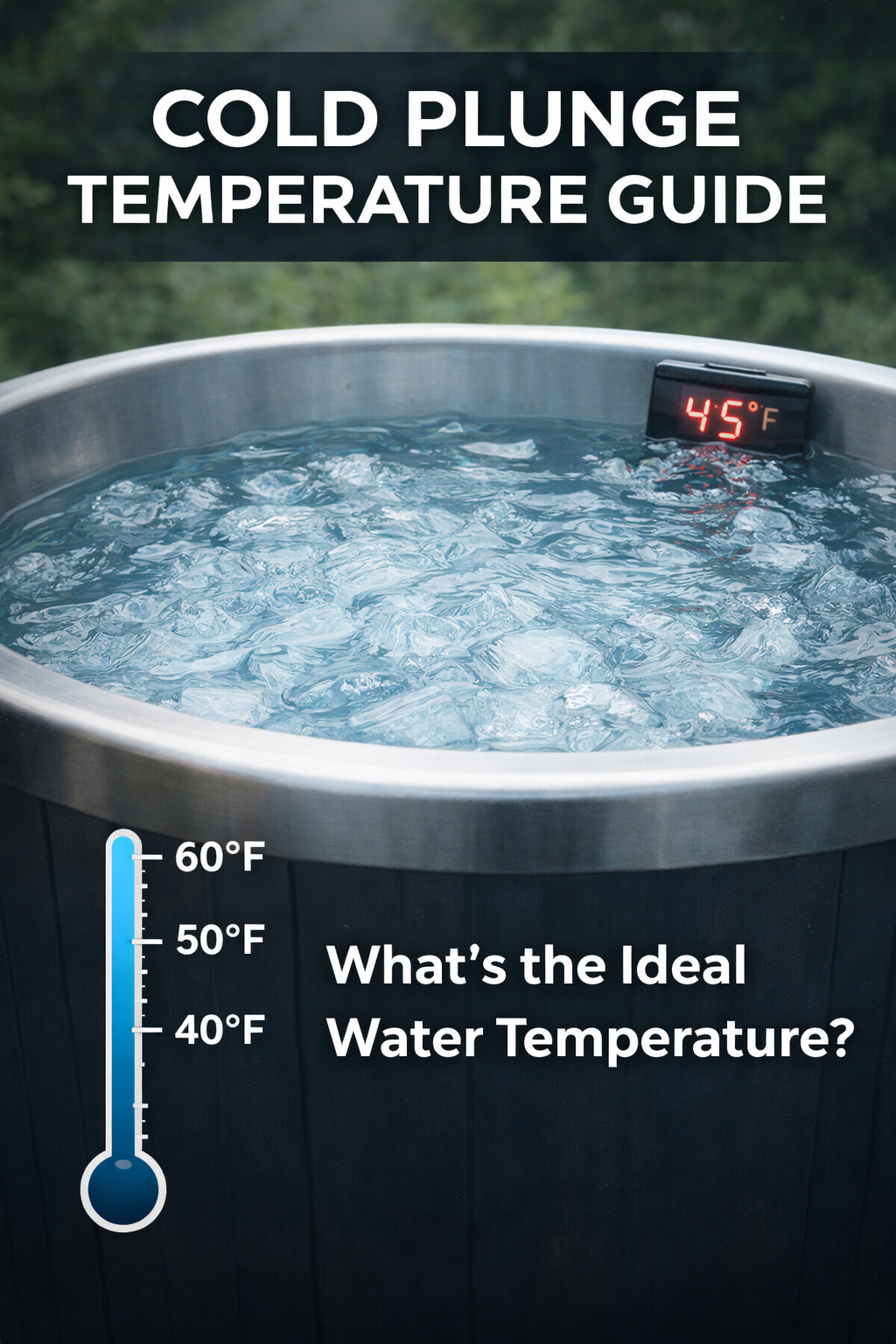
The optimal cold plunge temperature for most people is 45°F–55°F (7°C–13°C). This is the range where your body releases norepinephrine at 200–300% above baseline, vasoconstriction becomes therapeutically significant, and Brown Adipose Tissue activation begins. Beginners should start at 55°F–60°F for the first two weeks before moving lower. Duration matters as much as temperature — 2–5 minutes is the effective window for most people at most temperatures.

Cold water immersion triggers a cascade of neurochemical and circulatory responses — but only within the right temperature range.
Why Temperature Precision Matters More Than You Think
Cold plunge therapy does not have a universal temperature. The temperature that suits a professional marathon runner in post-training recovery differs significantly from what a beginner should step into on their first day. Getting the temperature wrong in either direction produces the same outcome: a practice you quit within a month because it either feels pointless or unbearable.
Your body does not respond to cold water in a straight line — it responds in layers. As soon as you enter, skin temperature drops sharply, triggering an immediate cold shock response: a gasp reflex, a spike in heart rate, and a surge of adrenaline. As you remain in the water and your breathing stabilizes, your body transitions from managed panic to controlled stress adaptation — and that is precisely when the measurable benefits begin to accumulate.
The Norepinephrine Window: Research shows that norepinephrine — the neurotransmitter responsible for focus, mood elevation, and inflammation control — begins releasing meaningfully at temperatures between 45°F and 55°F. Below 45°F, the body prioritizes survival over adaptation and the hormonal benefit curve flattens. Above 55°F, the stimulus is often insufficient to drive consistent neurochemical adaptation in experienced users.
Cold Plunge Temperature Ranges: What Each Level Does
Think of cold plunge temperatures as resistance levels on a training machine. Each range has a distinct physiological purpose. Knowing them lets you use cold therapy deliberately rather than guessing.
55°F–60°F (13°C–15°C): The Starting Line
This is where every beginner should start. At 55°F–60°F, the water is cold enough to trigger your body's circulatory response and begin building cold tolerance — but not so cold that breathing control becomes impossible. Most people can reach 3–5 minutes in this range within their first week.
Beginner Guidance
Spend a minimum of 1–2 weeks in the 55°F–60°F range before moving lower. Your nervous system needs time to adjust to the cold shock response. This phase is not weakness — it is laying the neurological and cardiovascular groundwork that makes everything colder, safer, and more effective. The people who skip this step are the ones who quit within a month.
50°F–55°F (10°C–13°C): The Wellness Sweet Spot
When 60°F feels comfortable and your breathing is steady within the first 15 seconds, move to the 50°F–55°F range. This is where most dedicated cold plungers find their groove — and the science explains why. The anti-inflammatory effect becomes more powerful, dopamine and norepinephrine release increases substantially, and cardiovascular conditioning begins to compound over consistent sessions. Most people stay in the water for 2–4 minutes at this temperature.
45°F–50°F (7°C–10°C): Advanced Recovery Territory
This is the range elite athletes and experienced cold therapy practitioners use for serious post-training recovery. At 45°F–50°F, deep muscle tissue cooling becomes significant — making this range particularly effective for reducing DOMS after high-intensity training. The cold shock response is intense: heart rate spikes sharply, breathing control requires active focus from the first second. Sessions here are shorter — 2–3 minutes is the effective therapeutic window. Experienced users only.
Below 45°F (Below 7°C): Diminishing Returns Territory
Below 45°F, the risks increase faster than the benefits for most people. Temperatures in the 37°F–44°F range can cause cold incapacitation — failure of muscle function and coordination — within minutes. Some very experienced practitioners use this range, but it requires strict time limits of under 2 minutes, full familiarity with your body's warning signals, and ideally a second person present. For the vast majority of cold plunge users, there is no meaningful therapeutic advantage to going below 45°F.
| Temperature Range | Main Body Response | Duration | Best For |
|---|---|---|---|
| 55°F–60°F (13°C–15°C) | Circulation activation, mild vasoconstriction, cold adaptation begins | 3–5 min | Beginners — first 2 weeks |
| 50°F–55°F (10°C–13°C) | Strong norepinephrine release, meaningful inflammation reduction | 2–4 min | General wellness, mood, recovery |
| 45°F–50°F (7°C–10°C) | Deep muscle cooling, significant hormonal response, BAT activation | 2–3 min | Athletic recovery, experienced users |
| Below 45°F (<7°C) | Severe cold shock, risk of cold incapacitation, diminishing returns | Under 2 min | Advanced practitioners only |
What Your Body Is Actually Doing in the Cold

The body's response to cold immersion unfolds in distinct phases — from the initial shock response to sustained hormonal and circulatory adaptation.
Vasoconstriction: The Inflammation Flush
The moment cold water contacts your skin, your blood vessels narrow — a process called vasoconstriction. This forces blood toward your core to protect vital organs, producing a measurable decrease in local inflammation, particularly in muscle tissue stressed through exercise. This is why cold water immersion has been a fixture in professional sports recovery rooms for decades before it became a consumer wellness trend.
The inflammation reduction is both mechanical and chemical. Cold exposure decreases pro-inflammatory cytokines while triggering the release of anti-inflammatory proteins. Studies in sports medicine have shown measurable decreases in creatine kinase — a key marker of muscle damage — after cold water immersion at 50°F–59°F. For anyone managing chronic inflammation or post-workout soreness, this mechanism alone justifies the practice.
The Dopamine and Norepinephrine Response
When you immerse in cold water at the optimal temperature range, your brain releases norepinephrine at 200–300% above baseline levels — and the elevated dopamine that follows can persist for hours after you exit. This is categorically different from the 90-minute caffeine spike most people are used to. The mental clarity and elevated mood that consistent cold plungers report are not placebo — they are supported by measurable, sustained changes in brain chemistry.
The 11-Minute Protocol: Research shows that approximately 11 total minutes of cold exposure per week — broken into multiple short sessions rather than one long one — is sufficient to trigger a 250% increase in dopamine levels that sustains for hours per session. This is why 3–4 sessions of 2–3 minutes each outperforms one session of 10+ minutes for neurochemical benefit.
Brown Adipose Tissue Activation
Brown Adipose Tissue (BAT) — sometimes called brown fat — is metabolically active tissue that generates heat by burning calories. Unlike white fat, which stores energy, BAT consumes it. Cold exposure at the 45°F–55°F range is one of the most reliable activators of BAT. Regular cold plungers show increased BAT activity over time, contributing to improved metabolic rate and insulin sensitivity — benefits that extend well beyond the session itself.
The Post-Plunge Vasodilation Effect
What happens after you exit the cold plunge is as important as what happens during it. As your body begins rewarming, the blood vessels that narrowed during immersion dilate rapidly — vasodilation — sending a rush of oxygenated blood back into muscles and peripheral tissues. This circulation surge clears metabolic waste including lactic acid and accelerates the delivery of nutrients to recovering muscle fibers.
Timing: Morning vs Evening Cold Plunge
When you plunge matters almost as much as how cold the water is. The time of day significantly affects what you get out of the session — and for some people, choosing the wrong time actively undermines their other wellness goals.
Morning Cold Plunge: Cortisol Alignment
Your cortisol levels peak naturally in the first hour after waking — this is your body's built-in alertness system. A morning cold plunge amplifies and extends this cortisol peak, producing enhanced focus, energy, and motivation that compounds the natural morning hormonal environment. For anyone who trains in the morning, uses the plunge as a pre-work mental reset, or struggles with morning grogginess, the morning session is typically the stronger choice.
Evening Cold Plunge: Timing Caution
Unlike a sauna session before bed, a cold plunge in the evening requires careful timing. The norepinephrine and dopamine surge from cold immersion increases alertness for 2–3 hours — which is a benefit in the morning but can delay sleep onset if done within 3 hours of bedtime. If you prefer evening sessions, finish at least 3 hours before your target sleep time. The post-plunge alertness window is real and should be respected.
Recommended Timing by Goal
- Energy and mental performance: Morning, within 1 hour of waking — amplifies natural cortisol peak
- Post-workout recovery: Within 1–4 hours after training — pairs with the metabolic waste clearance window
- Contrast therapy with sauna: Any time — finish with cold, allow natural rewarming. See our Contrast Therapy Guide for full protocol
- Evening use: No later than 3 hours before bed to avoid disrupting sleep onset
How to Build a Cold Plunge Routine That Lasts

A dedicated cold plunge setup at home removes the friction that breaks new habits — the fewer decisions you make on the spot, the more consistent your practice becomes.
Building a cold plunge routine that lasts works exactly like building strength in the gym — progressive overload, consistent exposure, and patience. You would not load your maximum weight on your first day. The same principle applies here.
Step 1: Start at 58°F–60°F and Build Tolerance
Begin at 58°F–60°F and stay at this temperature for at least 1–2 weeks. Your nervous system, cardiovascular system, and breathing patterns all need time to adapt before you increase intensity. When 60°F feels manageable — your breathing normalizes within 15–20 seconds — drop to 55°F–57°F and repeat the process. Each temperature decrease should feel like a hurdle you can clear, not a shock you are simply surviving.
Step 2: Master Breathing Before Worrying About Temperature
The gasp reflex when you enter cold water is involuntary — but you can train yourself to recover from it faster. The moment you enter, begin exhaling slowly through pursed lips. Breathe in through your nose for 4 counts, exhale through your mouth for 6 counts. Within 20–30 seconds your heart rate normalizes and the panic response subsides. Controlled breathing is the foundational skill that makes every other aspect of cold plunging safer and more effective. If your breathing is not controlled within the first 30 seconds, the water is too cold for your current adaptation level — regardless of what the thermometer says.
Step 3: Decrease Temperature Gradually — No More Than 2°F–3°F Per Week
Rapid temperature drops between sessions are the most common reason people plateau or quit. A 2°F–3°F weekly decrease gives your nervous and cardiovascular systems time to build genuine adaptation rather than just shock tolerance. Use a waterproof thermometer to verify actual water temperature — the integrated displays on many cold plunge units can be inaccurate by 2°F–4°F, which is significant at therapeutic ranges.
Step 4: Log Your Sessions
Track three data points per session: water temperature, duration, and a brief note on how you felt during and after. After 4–6 weeks, patterns emerge that show exactly how your body is adapting and when you are ready to progress. This removes the guesswork and keeps you moving forward rather than repeating the same stimulus indefinitely.
Step 5: Target 3–5 Sessions Per Week, Not Daily
For beginners, 3–5 sessions per week with 24–48 hours between sessions gives your nervous and cardiovascular systems adequate recovery time. Sports science research shows that even 2–3 sessions per week produce noticeable improvements in recovery markers, mood, and cold tolerance within 4–6 weeks. Consistency over weeks beats intensity in any single session.
Step 6: Add Contrast Therapy Once You Have a Foundation
Once you are comfortable at 50°F–55°F, adding contrast therapy — alternating between sauna heat and cold immersion — dramatically amplifies the circulatory and recovery benefits of each. A standard protocol: 10–15 minutes in the sauna at 170°F–190°F, followed by 2–3 minutes in the cold plunge at 50°F–55°F, repeated for 2–3 cycles. The alternating vasodilation and vasoconstriction creates a cardiovascular pumping effect that neither modality produces alone. For more detail on the cold plunge before or after sauna question, see our dedicated guide.
Who Should Be Cautious with Cold Plunge Temperatures
Cold plunge therapy is not for everyone without qualification. Certain health conditions make cold immersion — particularly at temperatures below 55°F — meaningfully riskier. This is not a reason to avoid it, but a reason to approach it with appropriate information.
Cardiovascular Conditions
Cold immersion causes an immediate increase in heart rate and blood pressure — manageable for healthy individuals but potentially dangerous for anyone with underlying heart disease, arrhythmia, or a history of cardiac events. The first 30 seconds of submersion carry the highest risk, as the autonomic nervous system activates acutely. If you have high blood pressure, coronary artery disease, or congestive heart failure, get explicit medical clearance before any cold plunge session — especially below 55°F.
Warning Signs: When to Exit Immediately
Exit the Water Immediately If You Experience:
- Uncontrollable shaking that does not settle within the first minute
- Numbness in hands or feet that moves rapidly up your limbs
- Chest tightness or pain during or immediately after immersion
- Confusion or disorientation — an early sign of hypothermia onset
- Skin turning white or blue beyond normal cold response
- Loss of grip strength or coordination when attempting to exit
- Inability to control breathing after more than 60 seconds in the water
If any of these occur: exit calmly, dry off, and rewarm gradually with clothing and a warm (not hot) drink. Do not shower hot immediately — the sudden blood pressure drop can cause fainting. Allow 10–15 minutes of natural rewarming first. Chest pain, confusion, or loss of coordination warrants immediate medical attention.
Choosing the Right Cold Plunge System for Temperature Control
Achieving and maintaining a precise therapeutic temperature — especially in the 45°F–55°F range — requires a cold plunge system with reliable chilling capability. Ice baths and stock tanks work for beginners at warmer temperatures but become impractical for consistent therapeutic use at lower ranges.
| Setup Type | Temperature Range Achievable | Consistency | Best For |
|---|---|---|---|
| Ice bath / stock tank | 32°F–55°F (temperature unstable) | Low — degrades as ice melts | Beginners testing cold therapy |
| Entry chiller system | 45°F–65°F (automated) | Moderate — maintains set temp | Regular users at wellness range |
| Premium chiller tub | 37°F–65°F (precise control) | High — consistent within 1°F | Serious users, athletic recovery |
| Commercial grade system | 37°F–65°F (smart controls) | Very high — app monitored | Daily users, full recovery stack |
Frequently Asked Questions
What is the ideal cold plunge temperature for maximum health benefits?
The optimal cold plunge temperature for most people is 45°F–55°F (7°C–13°C). This is the range where norepinephrine release reaches 200–300% above baseline, vasoconstriction becomes therapeutically significant for inflammation reduction, and Brown Adipose Tissue activation begins. Below 45°F, risks increase faster than benefits for most users. Above 55°F, the stimulus is often insufficient for consistent neurochemical adaptation in experienced users.
What is the best cold plunge temperature for beginners?
Beginners should start at 55°F–60°F (13°C–15°C) and stay in this range for at least 1–2 weeks before moving lower. This temperature triggers the main circulatory and hormonal responses of cold immersion without causing a shock response severe enough to make the practice feel unbearable. The first phase is about learning breathing control and building the neurological habit — not intensity. Everything else is built on that foundation.
How long should I stay in a cold plunge at 50°F?
At 50°F (10°C), the recommended duration is 2–4 minutes for users with moderate cold exposure experience. This window drives meaningful anti-inflammatory and hormonal responses without pushing into territory where muscle function and coordination begin to degrade. If your breathing is not controlled within the first 30–45 seconds at 50°F, exit and reassess — 50°F may still be beyond your current adaptation level.
Does colder water always mean better results?
No — this is one of the most common myths in cold therapy. Below 45°F, risks increase faster than benefits for most users. The therapeutic sweet spot where norepinephrine release, inflammation reduction, and cardiovascular adaptation are maximized without excessive physiological stress is 45°F–55°F. Going colder primarily adds risk without meaningful additional benefit for the vast majority of cold plunge users.
How many times per week should I cold plunge?
For most people, 3–5 sessions per week is the optimal balance between stimulation and recovery. Beginners should allow 24–48 hours between sessions while their nervous and cardiovascular systems adapt. Research shows that even 2–3 sessions per week produce noticeable improvements in recovery markers, mood, and cold tolerance within 4–6 weeks. The 11-total-minutes-per-week threshold for sustained dopamine elevation can be reached across multiple short sessions rather than one long one.
Is it safe to cold plunge with high blood pressure?
If you have hypertension, consult your doctor before beginning cold plunge therapy. Cold immersion causes an immediate increase in blood pressure through vasoconstriction and sympathetic nervous system activation — a response that can be significant for anyone with already-elevated baseline pressure. People with controlled hypertension may be able to cold plunge safely starting at 58°F–60°F for shorter durations under medical guidance. Uncontrolled hypertension or multiple medications for blood pressure warrants explicit medical clearance before any session.
Should I cold plunge in the morning or evening?
Morning is generally the stronger choice for most goals. A morning cold plunge amplifies the natural cortisol peak that occurs in the first hour after waking, producing sustained energy, focus, and motivation. Evening cold plunges are effective for recovery but should be finished at least 3 hours before bedtime — the norepinephrine and dopamine surge increases alertness for 2–3 hours and can delay sleep onset if the session is too close to bed. For sleep-focused recovery, an evening sauna session is a better choice than a cold plunge.

A quick visual reference for temperature ranges, durations, and who each level is best suited for — bookmark this before your next session.
Find Your Perfect Cold Plunge System
Every cold plunge system at Collective Relaxation is evaluated for temperature accuracy and consistency at therapeutic ranges — from beginner-friendly entry systems to precision chiller tubs for serious recovery.
📞 929-493-4366 | 📧 Jerry@CollectiveRelaxation.com | Mon–Fri 9am–5pm EST
Written by Jerry Vaiana — About Jerry


Leave a comment
This site is protected by hCaptcha and the hCaptcha Privacy Policy and Terms of Service apply.