Red Light Therapy vs. Blue Light Therapy: What’s the Difference?
Red light and blue light therapy are both non-invasive, chemical-free treatments — but they work through completely different mechanisms and target entirely different problems. Understanding which one is right for your goals is the difference between a protocol that transforms your skin and recovery, and one that produces no noticeable result at all.
The Core Difference
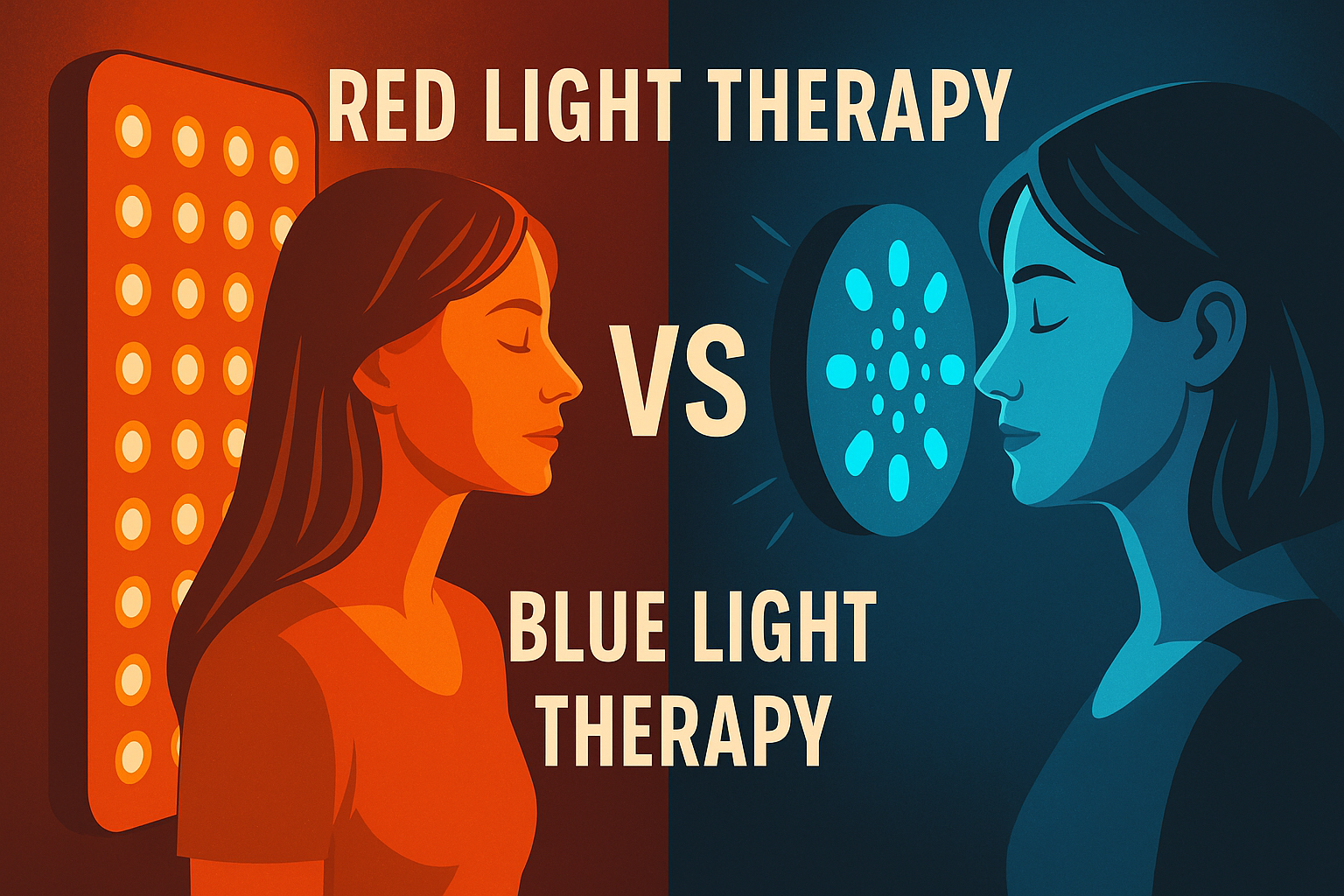
Red light (600–900nm) penetrates deep into tissue to stimulate cellular repair, boost collagen production, reduce inflammation, and accelerate healing. It is the tool for anti-aging, pain management, muscle recovery, and wound healing. Blue light (400–470nm) works on the skin's surface to kill acne-causing bacteria and regulate oil production. It is the tool for active breakouts, acne management, and mood regulation. Using both together provides a comprehensive protocol that addresses both surface and deep concerns simultaneously.

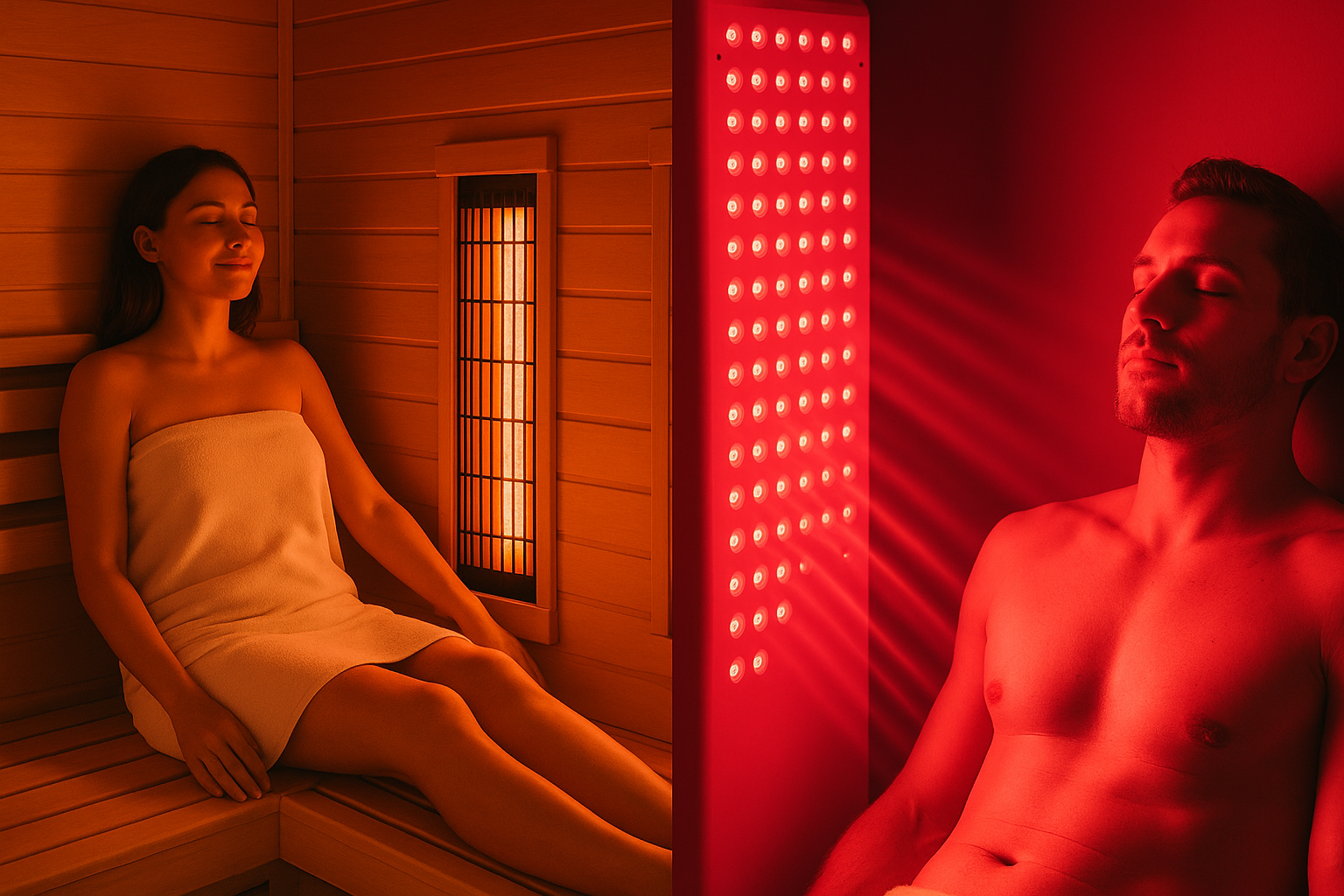
Different wavelengths of light interact with your body at different depths — red and near-infrared reach deep tissue, while blue light acts precisely at the skin's surface.
How Light Therapy Works: The Science of Photobiomodulation
Light therapy works by using specific wavelengths of visible light to trigger biological effects in your cells — without the risks of medications or invasive procedures. While it may seem like a modern invention, the use of light for healing goes back thousands of years to ancient Egyptian, Greek, and Roman civilizations that used sunlight therapeutically. Today's targeted approach with precise wavelengths is a significant advancement on that ancient understanding.
The scientific name for light therapy is photobiomodulation. Light is absorbed by cellular chromophores — light-sensitive components inside cells. When cells absorb certain wavelengths, it triggers a cascade of biological reactions: reduced inflammation, accelerated healing, bacterial destruction, or oil production control. This cellular response occurs without heat or tissue damage, making it fundamentally different from laser treatments or intense pulsed light therapies.
The Mitochondria Connection: Light therapy's effectiveness comes primarily from its interaction with mitochondria — the energy-generating organelles in every cell. When mitochondria absorb the correct wavelength, they stimulate an enzyme called cytochrome c oxidase, which increases production of ATP (adenosine triphosphate) — the cellular fuel that powers repair and regeneration. More cellular energy means faster healing, better protein synthesis, and improved overall cellular function across all treated tissue.
Why Wavelength Precision Matters
Every wavelength of light has a unique impact on the body. Only certain parts of the visible and near-infrared spectrum provide therapeutic benefits, and each wavelength penetrates tissue at a different depth. Red light (600–700nm) and near-infrared light (700–900nm) penetrate deep into skin, muscle, and even bone — making them effective for deep tissue healing and regeneration. Blue light (400–495nm), due to its shorter wavelength, primarily affects the outermost layers of skin — making it ideal for surface conditions like acne. You cannot substitute one wavelength for another and expect the same result. Precision matters.
| Light Type | Wavelength | Penetration Depth | Primary Benefits |
|---|---|---|---|
| Red Light | 600–700nm | Up to 10mm | Skin rejuvenation, collagen production, wound healing |
| Near-Infrared | 700–900nm | Up to several cm | Deep tissue healing, pain relief, muscle recovery |
| Blue Light | 400–470nm | 1–2mm | Acne treatment, bacteria elimination, oil regulation |
Red Light Therapy: Healing from the Inside Out
Red light therapy has become one of the most versatile wellness modalities available because it improves cell function at the most fundamental level — the mitochondria. When cellular energy increases, every downstream function improves: repair, replication, protein synthesis, waste clearance, and intercellular communication.
Collagen Production and Skin Rejuvenation
Red light therapy's ability to boost collagen production is one of its most clinically documented benefits. Collagen is the structural protein that gives skin its firmness and elasticity, and it naturally declines with age — causing wrinkles, sagging, and loss of skin tone. Red light therapy stimulates fibroblast cells in the dermis to produce more collagen, effectively slowing and partially reversing visible signs of aging. Regular treatments result in tighter, smoother skin without downtime or side effects.
Beyond collagen, red light also improves skin health by increasing blood flow, reducing localized inflammation, and accelerating the skin's natural renewal cycle. This multi-mechanism approach makes it significantly more effective than topical treatments that only address the surface.
Pain Relief and Inflammation Reduction
Red light therapy is a powerful tool for pain management because it addresses inflammation at its source rather than masking symptoms. Whether tissues are inflamed from injury, overuse, or chronic conditions like arthritis or tendonitis, red light reduces the inflammatory response while simultaneously accelerating healing through multiple pathways: increased circulation to deliver oxygen and nutrients, reduction of pro-inflammatory cytokines, and modulation of oxidative stress.
Muscle Recovery and Athletic Performance
Red light therapy is now standard in many professional sports recovery programs. It reduces delayed onset muscle soreness (DOMS) by accelerating the clearance of lactic acid, repairing micro-damage in muscle fibers, and restoring mitochondrial function in fatigued tissue. A 10–20 minute session targeting worked muscle groups after training can measurably reduce soreness at the 24 and 48 hour marks. For athletes in high-volume training blocks, this recovery acceleration compounds significantly over a competitive season.
Red light therapy pairs exceptionally well with other recovery modalities. Combined with contrast therapy — sauna heat followed by cold plunge — the combined protocol addresses recovery from multiple angles simultaneously.
Hair Growth and Wound Healing
Red light therapy stimulates hair follicle cells and increases scalp blood flow, making it an effective treatment for androgenetic alopecia (pattern baldness) and stress-related hair shedding. Most users see reduced shedding within 1–2 months and noticeable regrowth within 3–6 months of consistent treatment. It is a side-effect-free alternative to topical treatments that cause irritation or prescription medications with systemic effects.
For wound healing, red light boosts all stages of the repair process — reducing initial inflammation, increasing fibroblast activity during reconstruction, and improving microcirculation to the wound site. Healing time for cuts, burns, surgical incisions, and slow-healing diabetic ulcers can be significantly reduced. Enhanced collagen production during healing also results in better-organized tissue repair and reduced scarring.
Blue Light Therapy: Precision Surface Treatment

Blue light acts with precision on the skin's outermost layers, targeting acne-causing bacteria through a photochemical process that bacteria cannot develop resistance to.
Unlike red light, which penetrates deep into the body, blue light therapy is most effective for conditions at or just beneath the skin's surface. Its shorter wavelength and precise surface-level action make it uniquely suited for treating acne and other bacterial or oil-related skin conditions.
How Blue Light Destroys Acne Bacteria
Blue light is renowned for its ability to destroy Propionibacterium acnes (P. acnes) — the bacteria primarily responsible for inflammatory acne. These bacteria naturally produce light-sensitive compounds called porphyrins that absorb blue light wavelengths. When porphyrins absorb blue light, they trigger a photochemical reaction that generates reactive oxygen species — essentially causing the bacteria to self-destruct from the inside.
Why Bacteria Cannot Resist Blue Light: Unlike chemical antibiotics, which bacteria can evolve resistance to over time, the photochemical destruction triggered by blue light is a physical process. Bacteria cannot adapt to the fundamental physics of how light-activated porphyrins generate reactive oxygen species. This makes blue light a viable long-term acne treatment — particularly important for those managing antibiotic-resistant acne strains.
Oil Regulation and Pore Management
Beyond killing bacteria, blue light therapy calms overactive sebaceous glands — reducing sebum production without the drying effects associated with many topical acne treatments. This dual action addresses both primary causes of acne simultaneously: the bacterial environment and the oil excess that fuels it. Users consistently report not only fewer breakouts but also less oily skin overall and reduced pore visibility with regular treatment.
Mood Regulation and Circadian Rhythm Support
Blue light also plays an important role in regulating sleep cycles and mood. Specific wavelengths signal the brain to suppress melatonin production, increasing alertness and improving mood — which makes blue light therapy an effective treatment for seasonal affective disorder (SAD) when used correctly.
Critical Timing Note for Blue Light
The same melatonin-suppressing property that makes blue light effective for SAD and morning alertness also means that evening use can disrupt sleep. Blue light skin treatments should be completed several hours before bedtime. Blue light for SAD or mood regulation should be used in the morning — within an hour of waking — to align with natural circadian rhythms. Never use blue light therapy in the evening if sleep quality is a concern.
Red vs. Blue Light: Side-by-Side Comparison
| Factor | Red Light | Blue Light |
|---|---|---|
| Penetration Depth | Up to several centimeters | 1–2mm (surface only) |
| Primary Mechanism | Boosts cellular ATP production, stimulates repair | Kills bacteria via porphyrin activation |
| Best For | Anti-aging, pain, muscle recovery, hair loss, wounds | Acne, oily skin, bacterial skin conditions, SAD |
| Session Duration | 10–20 minutes | 5–15 minutes |
| Frequency | Daily use is safe and beneficial | Daily initially, reduce to 2–3x/week for maintenance |
| Results Timeline | 4–8 weeks for anti-aging; faster for pain relief | 2–4 weeks for visible acne improvement |
| Eye Safety | Low risk — follow manufacturer guidelines | Higher caution — always use protective goggles |
| Evening Use | Safe at any time | Avoid within 3 hours of bedtime |
Combination Therapy: Getting the Best of Both
For many conditions — particularly acne on aging skin — using both red and blue light delivers results that neither modality can achieve alone. Blue light eliminates surface bacteria and controls oil production while red light simultaneously reduces deeper inflammation and supports cellular repair. This combination breaks the acne cycle at both the surface and structural levels.
How to Combine Red and Blue Light Effectively
- Alternating days: Blue light one day, red light the next — allows each to work without interference
- Sequential same session: Blue light first (5–10 min) followed immediately by red light (10–20 min) — blue kills surface bacteria, red reduces the inflammation that bacteria triggered
- Goal-based separation: Blue light in the morning for acne management; red light in the evening for recovery and anti-aging
Multi-spectrum devices that offer both wavelengths independently controlled are the most flexible option. Look for devices where each wavelength can be used separately — mixed-wavelength devices that run both simultaneously are less effective than targeted sequential protocols.
Choosing the Right Device

Panel systems cover large treatment areas for full-body recovery, while masks and handheld devices offer precision for facial and targeted treatment — the right choice depends on your primary goals.
The device you choose matters as much as the therapy itself. Not all light therapy devices produce the wavelengths or power output needed for real clinical benefit. Here is what to evaluate:
Key Specifications to Look For
- Verified wavelength output: The device must specify exact wavelengths (e.g., 630nm, 660nm, 850nm for red/NIR — not just "red light"). Generic color labels without nanometer specifications are a red flag.
- Power output (irradiance): Measured in mW/cm². Higher irradiance means shorter sessions needed for equivalent benefit. Always check this spec — LED count alone tells you nothing about effectiveness.
- Coverage area: Panel systems are best for body treatment. LED masks are ideal for full-face treatment. Handheld devices work for targeted spots.
- Independent wavelength control: For combination therapy, you want to be able to run red and blue independently, not just simultaneously.
| Device Type | Best For | Price Range |
|---|---|---|
| LED masks | Full-face anti-aging and acne treatment | $100–$500+ |
| Handheld devices | Targeted spot treatment, small areas | $50–$300 |
| Panel systems | Full body recovery, muscle and joint treatment | $200–$1,500+ |
| Professional-grade panels | Highest irradiance, fastest results, large coverage | $500–$2,000+ |
Safety Guidelines
- Eye protection: Always use protective goggles during blue light treatment. Red light is lower risk but follow manufacturer guidelines for facial use.
- Session duration: More is not better — exceeding recommended times does not speed results and can cause irritation with blue light.
- Photosensitizing medications: Certain antibiotics (tetracyclines, fluoroquinolones), retinoids, and some antipsychotics increase photosensitivity. Consult your doctor before starting light therapy if you take any of these.
- Contraindications: Pregnant, active skin cancer, lupus or porphyria, or recent tanning bed use — consult a healthcare provider before use.
Frequently Asked Questions
What is the difference between red light therapy and blue light therapy?
Red light therapy (600–900nm) penetrates deep into tissue to stimulate cellular repair, boost collagen production, reduce inflammation, and accelerate healing. It is used for anti-aging, pain management, muscle recovery, and wound healing. Blue light therapy (400–470nm) works on the skin's surface to kill acne-causing bacteria through a photochemical reaction and regulate sebum production. It is used for active acne, oily skin, and mood regulation. The key difference is penetration depth — red light reaches deep tissue while blue light acts only on the outermost 1–2mm of skin.
Can I use red light therapy and blue light therapy together?
Yes — combining both therapies is often more effective than using either alone, particularly for acne on aging skin. Blue light eliminates surface bacteria and controls oil production while red light simultaneously reduces deeper inflammation and supports cellular repair. You can alternate days, run sequential sessions (blue first, then red), or use a multi-spectrum device. Look for devices with independently controlled wavelengths rather than mixed simultaneous output for the most targeted results.
How long does it take to see results from red light therapy?
For anti-aging benefits like improved skin tone and reduced wrinkles, most users see noticeable changes after 4–8 weeks of consistent daily sessions, with continued improvement over 3–6 months. Pain relief from red light can begin after just a few sessions, with progressive improvement as tissue heals over weeks. Hair regrowth typically takes 3–6 months of regular treatment. Consistency matters more than session intensity — regular shorter sessions outperform occasional longer ones.
Is red light therapy safe to use every day?
Yes — red light therapy is safe for daily use for most healthy adults. Daily sessions of 10–20 minutes per treatment area are appropriate and beneficial for ongoing anti-aging, recovery, and pain management goals. Once consistent improvements are established, many users reduce to 3–4 sessions per week for maintenance. There is no meaningful risk of overuse with red light at appropriate session durations. Always follow the manufacturer's guidelines for your specific device.
Does red light therapy help with muscle recovery?
Yes — red light therapy is one of the most evidence-backed recovery tools for athletes. It reduces delayed onset muscle soreness (DOMS) by accelerating lactic acid clearance, repairing micro-damage in muscle fibers, and restoring mitochondrial function in fatigued tissue. A 10–20 minute session targeting worked muscle groups within 1–4 hours after training produces measurably lower soreness at the 24 and 48 hour marks. It pairs particularly well with contrast therapy — sauna followed by cold plunge — for a comprehensive recovery protocol.
Can blue light therapy clear acne permanently?
Blue light therapy produces significant, consistent improvement in active acne — clinical studies show meaningful reduction in inflammatory papules and pustules within 2–4 weeks of regular treatment. However, because acne is driven by ongoing hormonal and bacterial factors, it tends to recur when treatment stops. Most users use blue light as an ongoing maintenance protocol rather than a one-time cure — daily use during active breakouts, reducing to 2–3 sessions per week once skin clears. The advantage over antibiotics is that bacteria cannot develop resistance to the photochemical process blue light uses.
Who should not use light therapy?
Light therapy is safe for most healthy adults, but certain conditions require caution or medical clearance. Avoid or consult a doctor first if you are taking photosensitizing medications (certain antibiotics, retinoids, some antipsychotics), have a photosensitive condition like lupus or porphyria, have active skin cancer, are pregnant, or have recently used a tanning bed. For eye conditions, always use appropriate protective goggles during treatment — particularly for blue light therapy near the face.
Shop Red Light Therapy at Collective Relaxation
Every red light therapy device we carry is evaluated for verified wavelength output and clinical-grade irradiance — so you know exactly what you are getting before you buy.
📞 929-493-4366 | 📧 Jerry@CollectiveRelaxation.com | Mon–Fri 9am–5pm EST
Written by Jerry Vaiana — About Jerry

Leave a comment
This site is protected by hCaptcha and the hCaptcha Privacy Policy and Terms of Service apply.