

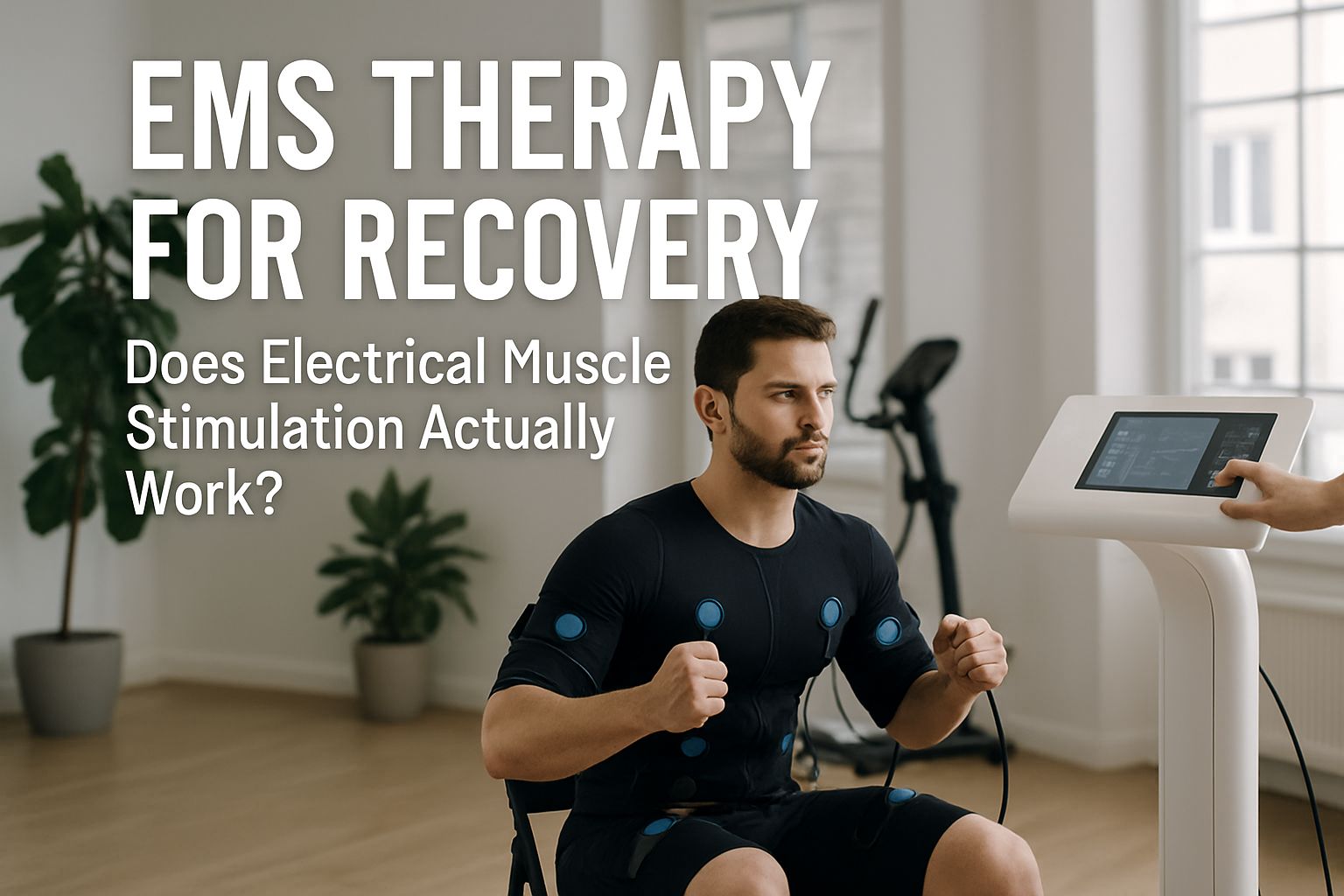
EMS Therapy for Recovery: Does Electrical Muscle Stimulation Actually Work?
EMS therapy has moved from hospital rehabilitation rooms to professional sports locker rooms — and now into living rooms. The science behind why it works is more robust than most people realize, and the gap between what it actually does and how it is marketed has never been wider. This guide covers the real mechanism, what peer-reviewed research proves, and exactly how to use it for maximum results.
What EMS Actually Does
EMS (Electrical Muscle Stimulation) delivers electrical impulses directly to motor neurons, causing genuine muscle contractions without voluntary effort. The muscle cannot distinguish a signal from your brain and one from an EMS device — it simply contracts. This mechanism drives faster recovery, prevents atrophy during injury, and maintains neuromuscular function when training is restricted. It is a recovery tool, not a fitness shortcut.
The Cellular Mechanism: What Actually Happens in the Muscle
To understand why EMS works — and where its limits are — you need to understand what is happening at the cellular level when you apply it.
Under normal circumstances, your brain initiates muscle movement by sending an electrical signal down a chain of motor neurons. That signal travels from the motor cortex through the spinal cord and out through peripheral nerves until it reaches the neuromuscular junction — the point where nerve meets muscle fiber. There, the signal triggers the release of acetylcholine, a neurotransmitter that crosses the synaptic gap and binds to receptors on the muscle cell membrane. This binding generates an action potential in the muscle fiber, causing calcium to flood from the sarcoplasmic reticulum and triggering the sliding filament mechanism that produces a contraction.
EMS bypasses the upper portion of that chain entirely. The electrical current travels through the skin and depolarizes the motor neurons directly at or near the muscle, generating the same action potential, the same calcium release, and the same contraction. The muscle cannot tell the difference between a voluntary signal and an EMS signal — it simply contracts. This is the foundational principle that validates EMS use across clinical rehabilitation and athletic recovery settings.
Frequency and Waveform: The Settings That Actually Matter
Most EMS marketing focuses on intensity. Intensity is the wrong thing to focus on. Frequency — measured in hertz (Hz) — determines which muscle fibers are recruited and what type of contraction is produced.
- 1–10 Hz: Individual twitches. Targets circulation and lymphatic drainage. Ideal for gentle post-workout recovery and rehabilitation protocols.
- 20–50 Hz: Sustained tetanic contractions targeting slow-twitch (Type I) endurance fibers. The primary range for DOMS reduction, recovery, and rehabilitation.
- 50–120 Hz: Fast-twitch (Type II) power fiber recruitment. Used in strength activation protocols. More fatiguing — appropriate for training support, not passive recovery.
Waveform matters equally. Quality devices use a biphasic symmetrical waveform — current alternates direction with each pulse, preventing charge buildup under the electrode. This eliminates skin irritation and allows longer sessions at therapeutic intensity. Cheaper monophasic devices deliver current in one direction, causing discomfort that forces users to drop intensity below the threshold needed for real benefit.
Why EMS Reaches Fibers Training Misses: During voluntary exercise, your nervous system follows the Henneman size principle — recruiting smaller, efficient slow-twitch fibers first and adding fast-twitch fibers only as load demands it. EMS bypasses this selective pattern and stimulates a broader cross-section of motor units simultaneously, including deeper fibers that moderate-intensity training rarely engages. This is a core reason EMS has consistent value in rehabilitation where full voluntary activation is restricted.
EMS vs. TENS: Two Completely Different Tools
This distinction causes more confusion — and more wasted money — than any other topic in electrical stimulation therapy. Using the wrong device for your goal means addressing the wrong problem entirely.
TENS (Transcutaneous Electrical Nerve Stimulation) uses low-level current to stimulate sensory nerve fibers, activating the gate control mechanism to suppress pain signals before they reach the brain. At lower frequencies it also stimulates endorphin release. TENS is a pain management tool. It does not cause meaningful muscle contractions and does not produce the recovery benefits attributed to EMS.
EMS uses higher current to depolarize motor neurons, causing genuine, visible, measurable contractions. The contraction is the mechanism — it drives blood flow, clears metabolic waste, and maintains the neuromuscular connections that injury and immobility would otherwise allow to weaken.
| Feature | EMS | TENS |
|---|---|---|
| Primary Target | Motor neurons / muscle tissue | Sensory nerve fibers |
| Primary Goal | Muscle contraction, recovery, rehabilitation | Pain signal suppression |
| Causes Contractions | Yes — visible and measurable | No |
| Mechanism | Motor neuron depolarization | Gate control theory / endorphin release |
| Current Level | Higher — above motor threshold | Lower — below motor threshold |
| Best Used For | Recovery, rehab, atrophy prevention | Chronic pain, nerve pain, acute pain management |
What the Clinical Research Actually Shows
EMS is not an emerging wellness trend. Neuromuscular electrical stimulation has been studied in clinical settings since the 1960s. The evidence base is large, peer-reviewed, and consistently replicated. Here is what the research actually supports.
Muscle Mass and Function: The 5–6 Week Evidence
Consistent EMS use over five to six weeks has been shown across multiple studies to produce approximately a 1% increase in muscle mass and a 10–15% improvement in overall muscle function. These numbers may appear modest — but context matters. These gains were achieved without increasing training load. In athletic settings where elite performance margins are fractions of a percent, a 10–15% improvement from a recovery tool is a meaningful edge. In rehabilitation, the same functional gain can shorten a 14-week recovery to 10 weeks.
DOMS Reduction: The Circulation Mechanism
Delayed Onset Muscle Soreness peaks at 24–72 hours post-exercise and is caused by micro-damage to muscle fibers and the subsequent inflammatory response. EMS reduces DOMS severity through enhanced localized circulation.
When EMS triggers rhythmic contractions in fatigued tissue, it acts as a mechanical pump — driving blood through the capillary network in the treated muscle, increasing delivery of oxygen and nutrients to damaged fibers, and accelerating removal of metabolic waste including lactic acid and hydrogen ions. Studies consistently show EMS applied within the 1–4 hour post-workout window produces measurably lower DOMS scores at 24 and 48 hours compared to passive rest.
The 2025 Resistance + EMS Research
A 2025 study examining resistance training combined with EMS found the combined protocol produced superior results in both muscle activation and recovery speed compared to resistance training alone. This positions EMS correctly: not as a replacement for training, but as an enhancer of both the training stimulus and the recovery response. Athletes who incorporated EMS into their existing regimen — rather than substituting it — consistently outperformed those using either approach in isolation.
Post-Surgical Rehabilitation: Where EMS Has the Deepest Evidence
The strongest clinical evidence for EMS comes from post-surgical rehabilitation. Three applications are particularly well-documented:
ACL Reconstruction: After ACL surgery, quadriceps inhibition — an involuntary nervous system suppression of muscle activation around the injured joint — is the primary barrier to early recovery. EMS bypasses this inhibition by stimulating motor neurons below the inhibitory signal, forcing quadriceps contractions and maintaining neuromuscular connectivity during a period when the brain would otherwise allow that pathway to weaken. Research consistently shows faster return to voluntary strength in patients receiving EMS during the early post-operative period.
Total Knee Replacement: Quadriceps weakness after TKR is a primary driver of long-term functional limitation. Early neuromuscular electrical stimulation — often beginning within 24–72 hours post-surgery — significantly reduces muscle atrophy and accelerates recovery of voluntary strength compared to rest-only protocols.
Stroke Rehabilitation: In patients with partial paralysis following stroke, EMS re-establishes motor pathways between the brain and muscles that have lost voluntary activation. Repeated EMS-driven contractions reinforce the neural circuits that physical therapy simultaneously rebuilds — a process called neuroplastic reinforcement.
Clinical Standard of Care: Neuromuscular electrical stimulation applied within the first 24–72 hours post-surgery has been shown to significantly reduce muscle atrophy and accelerate the return of voluntary strength compared to rest-only recovery protocols. Early EMS integration has become standard practice in many orthopedic rehabilitation programs.
Preventing Atrophy During Immobility
Muscle atrophy begins within 72 hours of immobility and is not linear — the first days produce disproportionately rapid decline, particularly in Type I slow-twitch fibers. Studies on bed rest and casting have documented losses of up to 4–5% of muscle cross-sectional area in the first week alone. Rebuilding takes three to four times as long as the loss period.
EMS applied to immobilized muscle groups slows this atrophy rate substantially by maintaining metabolic activity in the fiber, preserving integrity of the neuromuscular junction, and continuing to stimulate the protein synthesis pathways that downregulate during immobility. This applies equally to post-surgical patients, individuals on bed rest, and anyone facing extended periods of reduced mobility.
Who Benefits Most from EMS Therapy
EMS delivers its most consistent, well-documented results across three groups. Understanding which applies to you sets accurate expectations for what EMS will — and will not — do.
Athletes in High-Intensity Training Blocks
For athletes training through competitive seasons, tournament schedules, or consecutive training days, the recovery window between sessions is the limiting factor in performance. EMS shortens that window without adding mechanical load to already-stressed joints and connective tissue.
A 20–30 minute EMS session targeting the primary muscle groups used in training — applied 1–4 hours post-session — drives circulation through treated tissue, accelerates metabolic waste clearance, and maintains neural drive to the muscle. The athlete starts the next session from a higher recovery baseline than passive rest alone would allow. NFL, NBA, and European football teams have incorporated EMS into their recovery protocols specifically for this reason.
Individuals Recovering from Injury or Surgery
This is where EMS has the deepest evidence base. Regardless of injury type — torn ligament, stress fracture, joint replacement — the challenge during recovery is always the same: keeping affected muscles active when voluntary movement is restricted. EMS addresses this directly. It maintains involved muscles, decreases wasting, and preserves the nerve-muscle connections that physical therapy will later rebuild. Patients who use EMS during immobility typically enter active rehabilitation with significantly less atrophy to overcome — which directly shortens total recovery time.
Older Adults Managing Sarcopenia
Sarcopenia — progressive age-related muscle loss — accelerates considerably after age 60 and is a primary driver of reduced mobility, increased fall risk, and loss of functional independence. The resistance training needed to combat sarcopenia is often contraindicated or difficult to tolerate due to joint pain, cardiovascular limitations, or balance issues.
EMS provides a low-impact, joint-friendly alternative that delivers genuine muscle stimulation without mechanical stress. Used three to four times per week at 15–25 minutes per session, EMS has been shown to help older adults maintain functional muscle mass and preserve the neuromuscular efficiency required for safe, independent daily movement.
Using EMS at Home: Timing, Placement, and Consistency
The Post-Workout Window
The most important timing insight from the research is the 1–4 hour post-workout window. During this period, metabolic waste is still concentrated in exercised tissue and the inflammatory cascade is just beginning. EMS-driven circulation at this stage clears waste and moderates inflammation before it fully peaks. Studies show EMS used in this window produces significantly lower DOMS scores at 24 and 48 hours compared to passive rest. Using EMS the following morning is still beneficial — but the window effect is substantially reduced once inflammation has already peaked.
| Goal | Frequency | Session Duration | Optimal Timing |
|---|---|---|---|
| Post-workout recovery | 2–4x per week | 20–30 min | 1–4 hours after exercise |
| Injury rehabilitation | Daily (low intensity) | 15–20 min | Morning or after light activity |
| Atrophy prevention | Daily | 15–20 min | Any consistent time |
| Athlete maintenance | 2–3x per week | 20–30 min | Rest days or active recovery days |
| Sarcopenia management | 3–4x per week | 15–25 min | Morning, after light stretching |
Electrode Pad Placement by Muscle Group
Pad placement is the most common technical error in home EMS use. Pads must sit on the belly of the target muscle — the thickest, most central portion — with sufficient spacing between electrodes to create a complete circuit through the full depth of the tissue. Too close together produces shallow, ineffective contractions. Over joints, tendons, or bony prominences produces discomfort with minimal useful stimulation.
- Quadriceps: One pad on the upper outer thigh, one on the lower inner thigh just above the kneecap — never on the knee joint itself.
- Hamstrings: One pad just below the glute fold on the upper hamstring, one mid-thigh on the posterior surface.
- Calves: One pad on the upper gastrocnemius belly, one on the lower calf — avoiding the Achilles tendon.
- Lower back: One pad on each side of the spine at the lumbar level on the erector spinae — never directly over the spine.
- Upper traps and shoulders: One pad on the trapezius belly, one on the lateral deltoid.
- Abdominals: Two pads symmetrically on either side of the midline, targeting the rectus abdominis above the navel.
Always prepare the skin before applying pads — clean the area, remove lotion or oil, and allow to dry. Residue increases electrical resistance and reduces signal quality. Quality reusable electrode pads last 20–30 sessions before adhesion degrades.
Combining EMS with Sauna, Cold Plunge, and Red Light Therapy
EMS integrates powerfully into a layered recovery stack. The sequence matters because each modality works through a different mechanism — the order determines whether they complement or compete with each other.
The Optimal Recovery Stack Sequence
- EMS (20–30 min, 1–4 hrs post-workout): Clear metabolic waste and optimize circulation while tissue is still warm and waste is concentrated.
- Cold plunge or cold immersion: Reduce acute inflammation after circulation has been optimized. See our guide on cold plunge timing for the full contrast protocol.
- Red light therapy: Support cellular repair and mitochondrial function as the final step — red light works best on tissue where circulation has been optimized and inflammation reduced.
Where Does Sauna Fit?
Use sauna either before EMS — to pre-warm tissue and increase baseline circulation before stimulation — or as a completely separate session several hours later. Applying EMS immediately after a long sauna session is not recommended: the cardiovascular system is already under significant circulatory demand from heat exposure, and the combined load can cause lightheadedness in some users. For more on sauna's role in a full recovery protocol, see our Infrared vs Traditional Sauna guide.
What EMS Cannot Do
Know the Limits
EMS cannot replace resistance training for building significant muscle mass, cannot produce meaningful fat loss on its own, and cannot compensate for poor sleep, inadequate nutrition, or chronic overtraining. Marketing claims positioning EMS as a passive fat-loss or body-sculpting tool are not supported by clinical evidence.
The most common EMS disappointment comes from people who expected wearing electrode pads while watching television to reshape their body. The metabolic demand of EMS-induced contractions is too low to drive meaningful fat loss or hypertrophy independently. The 1% muscle mass increase documented in research came from dedicated, consistent sessions — not passive background use.
Where EMS fundamentally cannot help is in any objective requiring progressive overload — the systematic increase in training stress that drives muscular and cardiovascular adaptation. EMS cannot replicate that stimulus. Athletes who understand this limitation use EMS effectively. Those who expect it to replace training will be disappointed every time.
How to Choose an EMS Device: The Specs That Actually Matter
Consumer EMS devices have proliferated rapidly and the quality gap between the best and worst options is enormous. Most marketing focuses on design and app connectivity. The specifications that determine whether a device produces clinical-grade results are rarely highlighted. Here is what to evaluate before you buy.
Frequency Range — The Most Important Spec
Any device that lists only "intensity levels" without specifying frequency range is a red flag. Look for adjustable frequency of at least 1–80 Hz, with premium devices reaching 1–120 Hz. This range lets you access low-frequency recovery protocols (1–20 Hz) and higher-frequency activation protocols (50–120 Hz). A device locked to a single frequency — regardless of intensity — cannot be optimized for different recovery goals.
Number of Independent Channels
Each channel controls one pair of electrode pads. A single-channel device means treating one muscle group per session. For meaningful recovery work, look for a minimum of 4 independent channels — allowing simultaneous treatment of both quadriceps, both hamstrings, or a combination of upper and lower body groups. High-end devices offer 6–8 channels for full-body protocols.
Waveform Type
Look for a device specifying a biphasic symmetrical waveform. This alternates current direction with each pulse, preventing charge buildup that causes skin irritation during longer sessions. Monophasic devices cause more discomfort at equivalent therapeutic intensity — users reduce intensity below the therapeutic threshold to stay comfortable, which defeats the purpose entirely.
Intensity Control Resolution
Look for at least 20 discrete intensity levels. Large muscles like quadriceps tolerate and require higher current than smaller stabilizer muscles. Fine-grained control lets you optimize each channel independently rather than compromising across muscle groups.
Electrode Pad Quality and Replaceability
Quality pads use self-adhesive hydrogel that maintains consistent skin contact and conducts current evenly across the pad surface. Cheap pads develop hot spots — areas of concentrated current — that cause discomfort before therapeutic intensity is reached. Look for pads rated for 20–30 uses minimum and verify replacement pads are readily available for the device you choose. Proprietary connectors on lower-quality devices can make replacements expensive or impossible to source.
| Spec | Minimum to Look For | Why It Matters |
|---|---|---|
| Frequency Range | 1–80 Hz adjustable | Controls which fiber type is recruited — slow-twitch recovery vs fast-twitch activation |
| Independent Channels | 4 minimum | Treat multiple muscle groups simultaneously |
| Waveform | Biphasic symmetrical | Prevents skin irritation — allows longer sessions at therapeutic intensity |
| Intensity Levels | 20+ discrete levels | Fine-tune each channel to the muscle group being treated |
| Electrode Pads | 20–30 use rated, replaceable | Consistent conductivity — no hot spots or signal degradation |
Safety: Who Should and Should Not Use EMS
EMS is considered low-risk for healthy adults when used correctly. Clear contraindications exist and must be understood before use:
- Implanted electronic devices (pacemakers, defibrillators, neurostimulators): EMS current can interfere with device function. Do not use without explicit clearance from your cardiologist or device specialist.
- Pregnancy: Do not use EMS over the abdomen or lower back during pregnancy.
- Active infection or open wounds: Never apply electrode pads over broken or infected skin.
- Epilepsy: Consult a physician before use.
- Deep vein thrombosis (DVT): EMS-driven circulation in a limb with active DVT presents clot risk — medical clearance required.
- Carotid arteries: Never place pads over the carotid arteries in the neck.
- Reduced skin sensation (common in diabetic neuropathy): Users may not feel pain signals indicating excessive intensity. Medical guidance recommended.
Signs of overuse: persistent muscle fatigue or soreness localized specifically to electrode placement areas. If this occurs, reduce frequency and allow at least 48 hours between sessions targeting the same muscle group.
Frequently Asked Questions
What is EMS therapy and how does it work?
EMS (Electrical Muscle Stimulation) uses electrical impulses delivered through electrode pads placed on the skin to directly stimulate motor neurons and cause genuine muscle contractions. The electrical current bypasses the voluntary nervous system and depolarizes motor neurons at the muscle, triggering the same calcium release and sliding filament mechanism as a voluntary contraction. The muscle cannot distinguish a signal from your brain and one from an EMS device — it simply contracts.
What is the difference between EMS and TENS, and which is better for recovery?
TENS targets sensory nerve fibers to block pain signals using the gate control mechanism — it is a pain management tool and does not cause meaningful muscle contractions. EMS targets motor neurons and muscle tissue directly, producing genuine contractions that drive circulation, clear metabolic waste, and maintain neuromuscular connections. For athletic recovery, muscle activation, and reducing DOMS, EMS is the correct tool. TENS addresses pain, not recovery.
When is the best time to use EMS for the fastest recovery results?
Research identifies the 1–4 hour post-workout window as optimal for EMS recovery use. During this period, metabolic waste is still concentrated in exercised tissue and inflammation is just beginning. EMS-driven circulation at this stage significantly reduces DOMS intensity over the following 24–48 hours. Using EMS the following morning is still beneficial but the effect is substantially reduced once the inflammatory response has already peaked.
How often should I use EMS to see results?
For fitness recovery, 2–4 sessions per week is the evidence-backed sweet spot. Clinical studies showing 10–15% improvements in muscle function used this frequency consistently over 5–6 weeks. Daily use at moderate-to-high intensity risks overstimulation. For rehabilitation or atrophy prevention, daily sessions at low intensity are appropriate and commonly recommended by physical therapists. Allow at least 48 hours between moderate-to-high intensity sessions on the same muscle group.
Can EMS help with muscle loss in older adults?
Yes. Sarcopenia — age-related muscle loss — accelerates significantly after age 60 and is a leading cause of reduced mobility, fall risk, and loss of independence. EMS provides low-impact, joint-friendly muscle stimulation appropriate even for those who cannot tolerate traditional resistance training. Used 3–4 times per week at 15–25 minutes per session, EMS can help older adults maintain functional muscle mass and the neuromuscular efficiency needed for safe daily movement.
What should I look for when buying an EMS device?
Prioritize adjustable frequency range (minimum 1–80 Hz), at least 4 independent channels, biphasic symmetrical waveform, 20 or more discrete intensity levels, and quality reusable electrode pads rated for 20–30 sessions. Frequency range is the most critical specification — it determines which fiber types are recruited and whether the device can be optimized for different recovery goals. Avoid any device that lists only intensity levels without specifying frequency range.
Is it safe to use EMS every day?
Daily use at low intensity is safe and appropriate for rehabilitation and atrophy prevention — this is commonly recommended in clinical settings. For recovery or fitness use at moderate-to-high intensity, limit to 2–4 sessions per week with at least 48 hours between sessions targeting the same muscle group. People with pacemakers or other implanted electronic devices, epilepsy, active DVT, pregnancy, or open wounds should not use EMS without medical clearance.
Shop EMS Devices at Collective Relaxation
Every EMS device we carry has been evaluated for the specifications that produce real recovery results — adjustable frequency, multiple channels, biphasic waveform.
📞 929-493-4366 | 📧 Jerry@CollectiveRelaxation.com | Mon–Fri 9am–5pm EST
Written by Jerry Vaiana — About Jerry



Leave a comment
This site is protected by hCaptcha and the hCaptcha Privacy Policy and Terms of Service apply.